
There’s a lot of American history that we learn in school, about how the country was formed and what has happened since then. There’s also a lot of cultural history running around, and it’s just as important. An aspect of history that I didn’t learn much about, and I’m afraid still isn’t being taught much, is Native American history. Who was here before us, and how did my state transition from a Native American territory to a United States territory?
Near Fort Snelling (which is important for various reasons), Pilot Knob stands as a sort of “peak”. Even though it isn’t very tall, it sits on the bank of the Mississippi River, making it an ideal vantage point. To the Dakota people, it was Oheyawahi, which means “a hill much visited”. The visits were not just for scouting; the hill was also a cemetery. This site was well known to the Dakota, and not just because of its cultural significance.
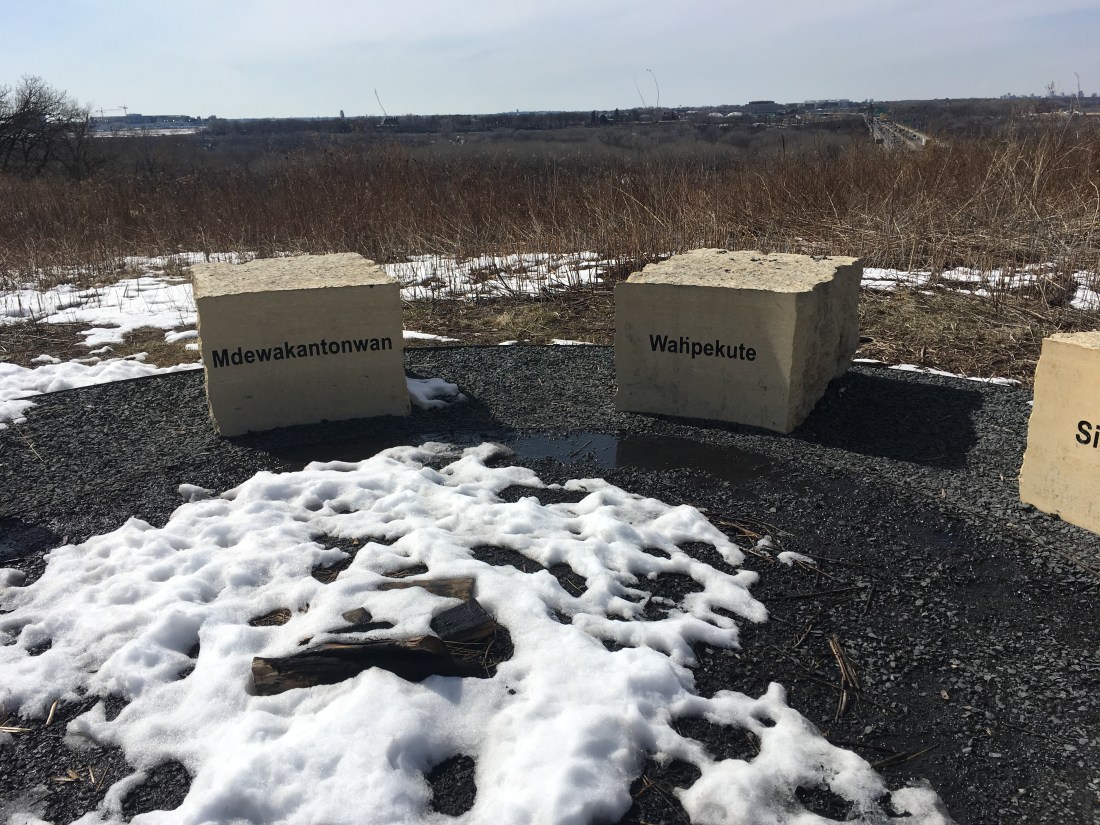
A brief walk from the highest point leads to a simple circle with seven stones cut from Minnesota stone. Each bears the name of one of the tribes that signed over their land to the United States in the 1850s. The negotiations started in a warehouse, but Chief Wabasha (for whom the town of Wabasha is named) requested they be moved to this hill, so the Dakota could see what they were giving up.
What I found interesting is the names of the tribes. Because I think words are really neat, the names of the tribes stuck out to me. There are seven stones and seven names, but one doesn’t end with “-wan” or “-wana”. I guessed that “-wan” meant “people”, which is true, but were then the Wahpekute not a “people”? Were they not Dakotan, and therefore used a different language with a different name structure?
It turns out it was the first option. Wakpekute comes from the words for “to shoot” and “leaves”, meaning they were the shooters from the leaves, or the guerrilla warriors. In fact, the two stones I photographed were the two major tribes in the area.
This is an example not only of appreciating the history that came before us, but also of taking advantage of the great internet that we have to learn something. Don’t be afraid of learning. There’s little opportunities everywhere.
 That's Pretty NEET