Marvel Spotlights, Part 1

Got distracted from my Spider-Man spotlights, but this time I’m at the forefront. Marvel cards for MtG have been spoiled literally earlier today (at time of posting), so this is the perfect time to look up old comics and put references to cards. More to come later, I’m sure, and there’s more than a couple right now, so this might end up a longer post, with scan quality being less than usual. Here we go!

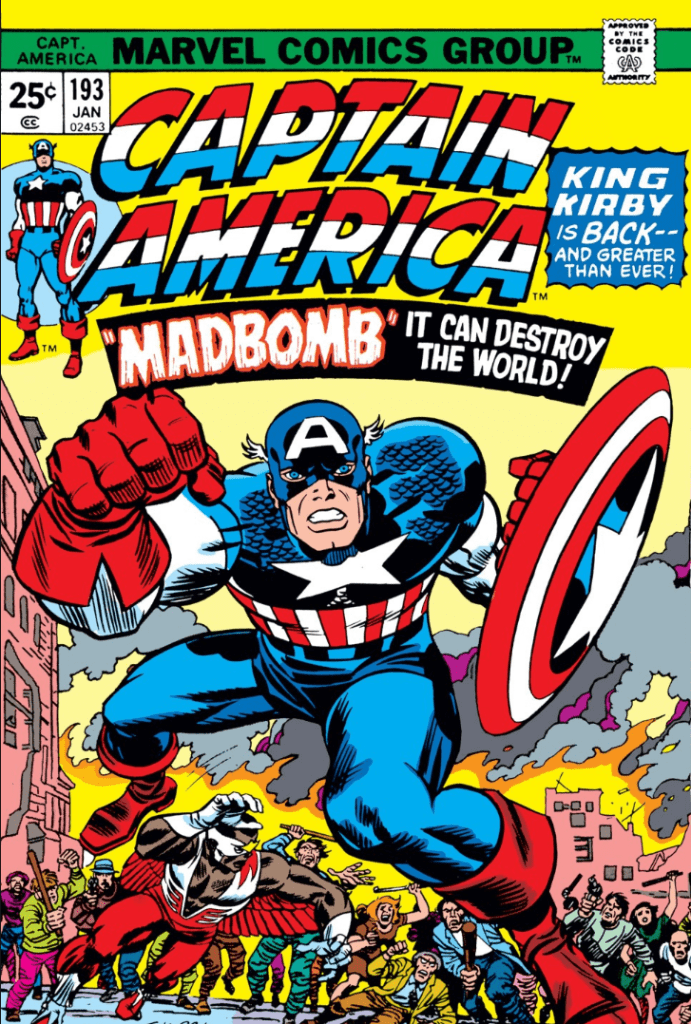
They’re actually making this kinda easy for me this time. The number in the top left was accurate, this is issue 193 from the Captain America run that started in 1968. The Madbomb, as indicated in the title, is a device that makes people mad and riot. It also causes Cap and Falcon to become temporarily racist at each other. Oh, and the reveal at the end, that sets up a cliffhanger for the next comic, is a massive Madbomb designed to destroy the United States. This device is called Big Daddy.
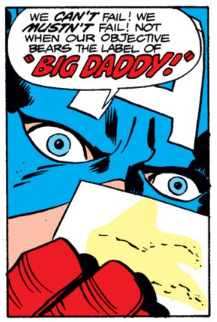
Just thought I’d leave this panel here. No reason.
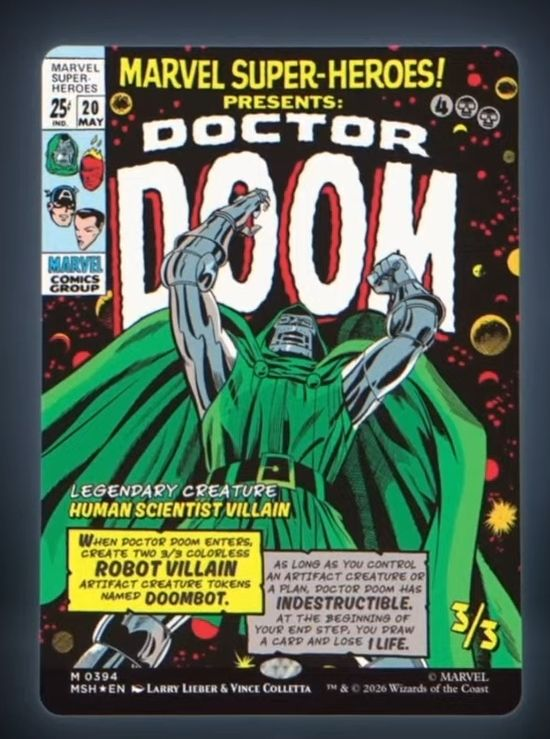
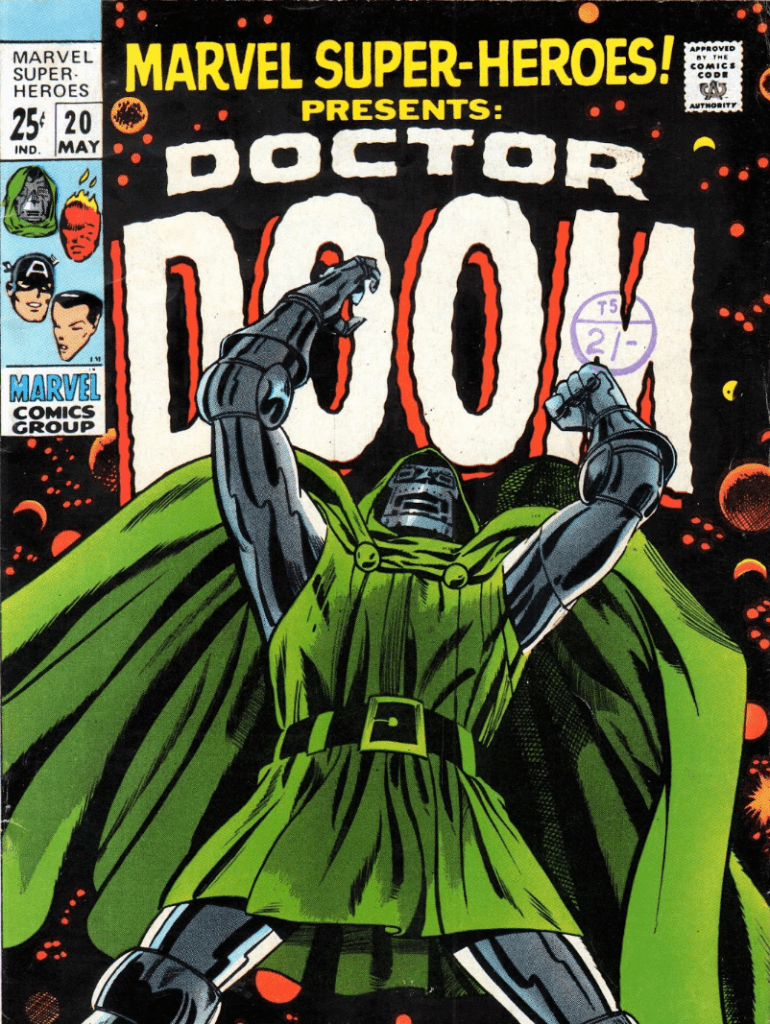
Another helpfully numbered image, this is issue 20 from the omnibus series Marvel Super-Heroes, which just kinda had whoever they wanted in there. As indicated in the top corner, you can see Doom, Torch, Cap, and Namor in this one, right? Nope, this is straight up Doom’s origin story, pieced together by a demonic trickster guy that is offering to make all Doom’s dreams come true, weaved through flashbacks of his childhood, his first love, etc. It suffers from that old-school kinda crap writing, but it does a good job of making us sympathize with the guy.
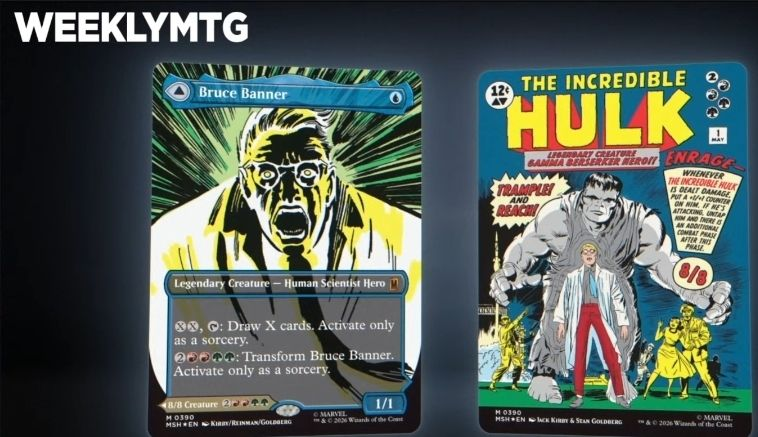
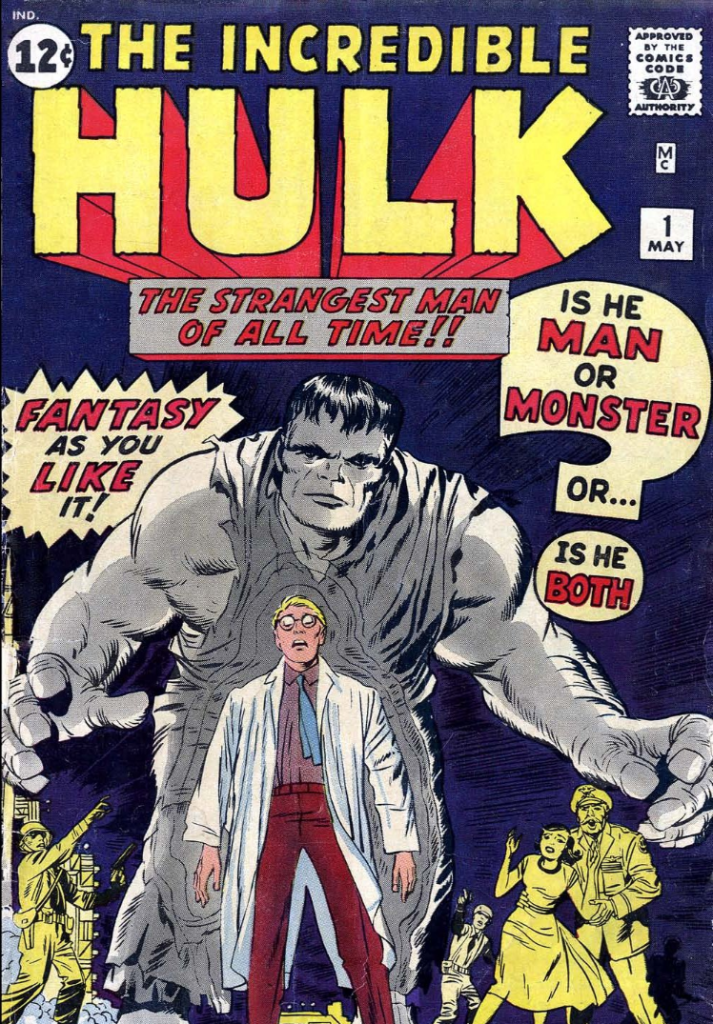
There’s actually more editing on this first image than they usually do…but it is an iconic shot, so I guess I can give them a pass. That’s the panel where Bruce Banner first starts turning into the Hulk, in the first issue of the first Incredible Hulk comic. The cover is the backside of the card. Funnily enough, he was only gray at the start of this comic. By the second issue, he was already green.
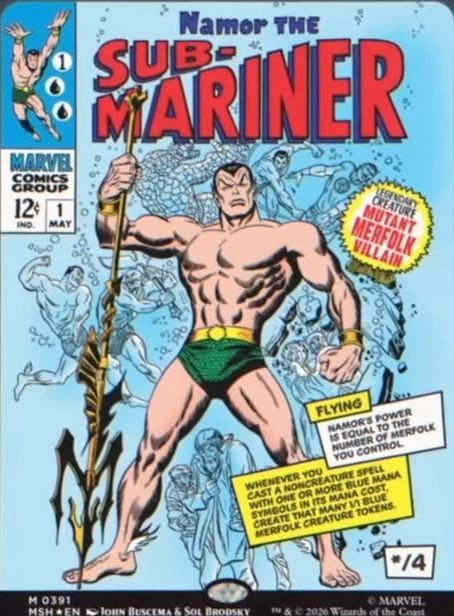
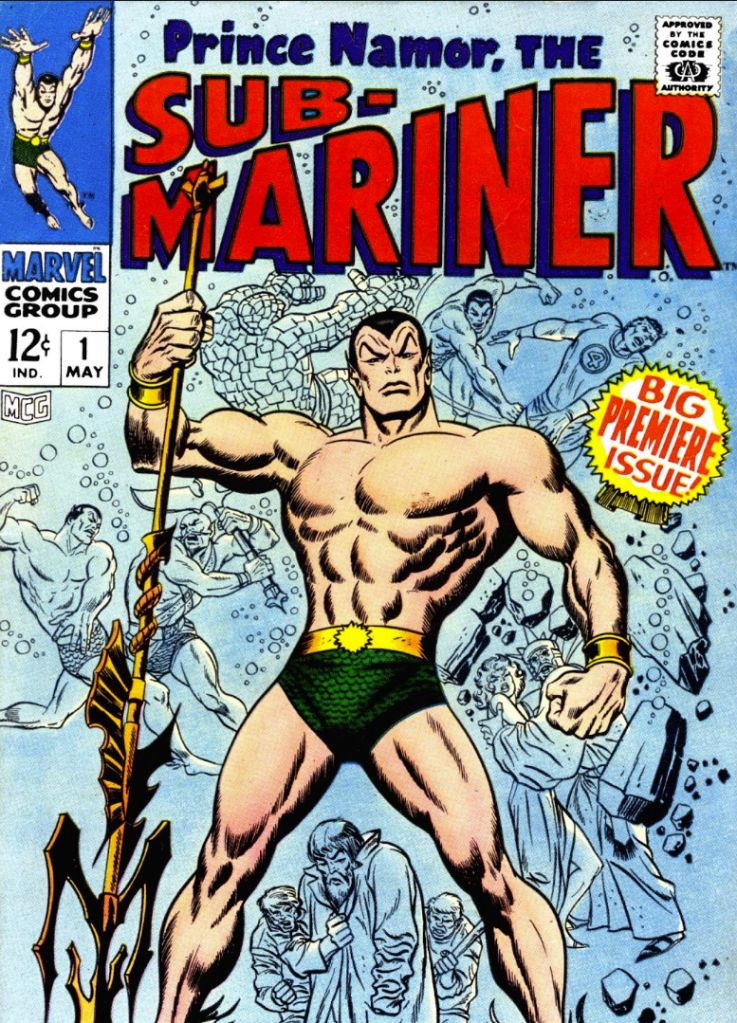
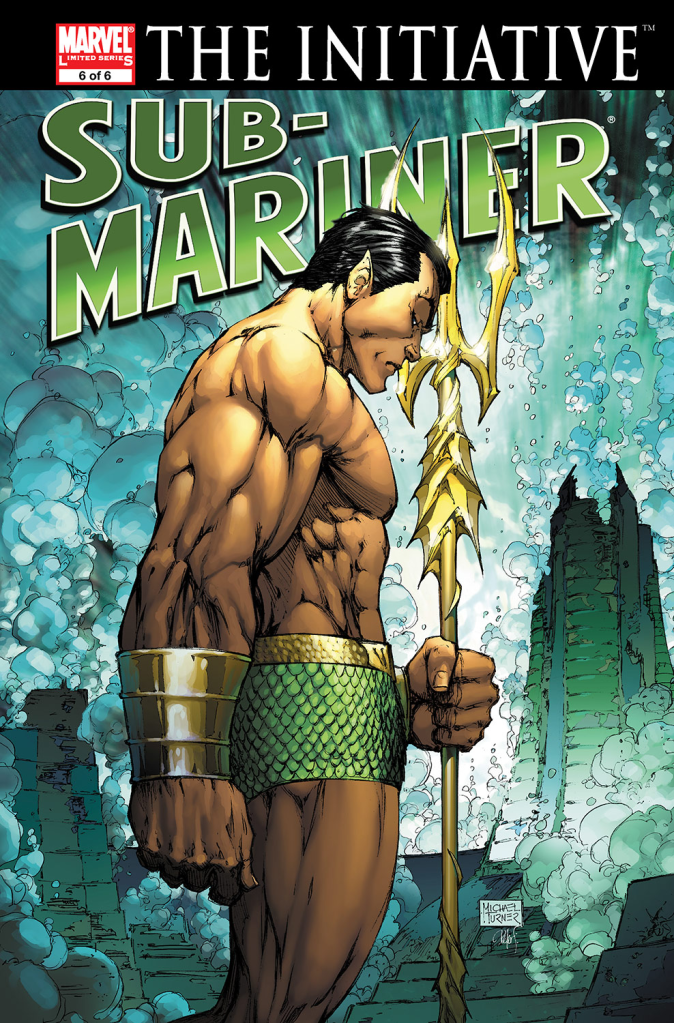
Several years after being introduced as a villain for the Fantastic Four (and simp for Invisible Girl), Namor was given his own run in 1968, this being the cover from his first issue. The very first thing that happens is a villain is pretty sure that he’s killed Namor, so that’s a good start.
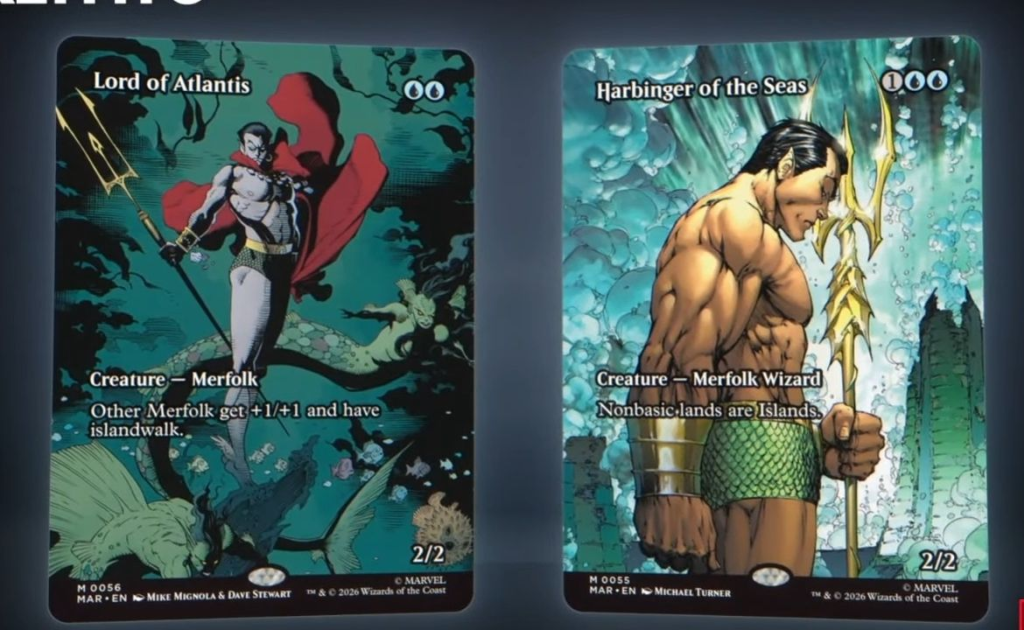
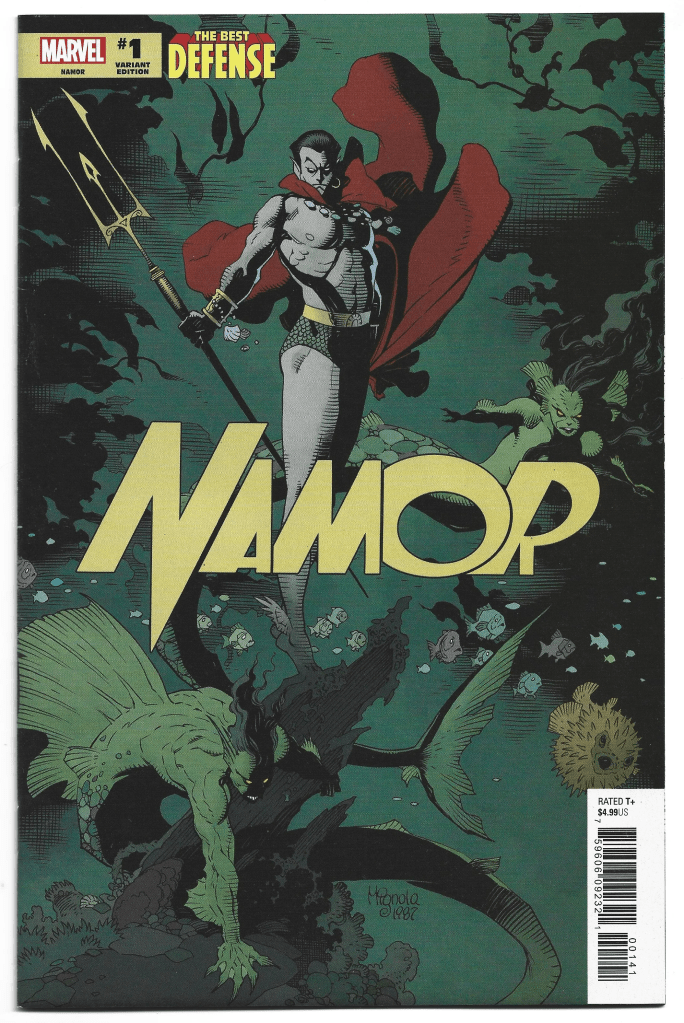
Sadly, my very legal method of acquiring comic book covers didn’t have these two. However, I can tell you that the first one is a variant cover for a big issue called The Best Defense, which I can only assume refers to Namor doing a lot of offense.
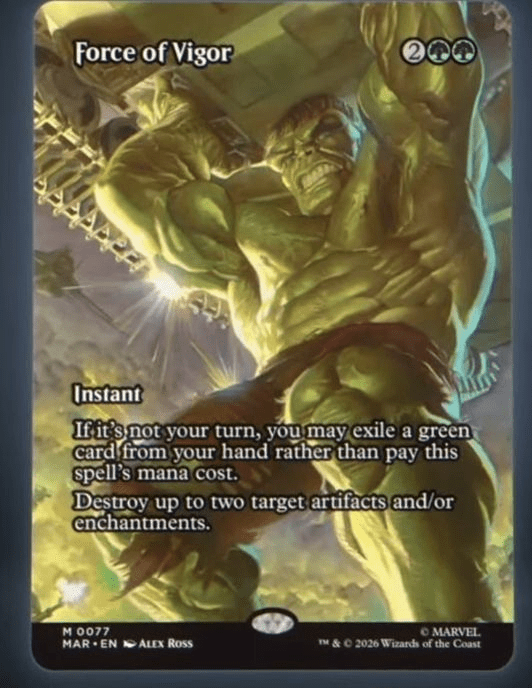
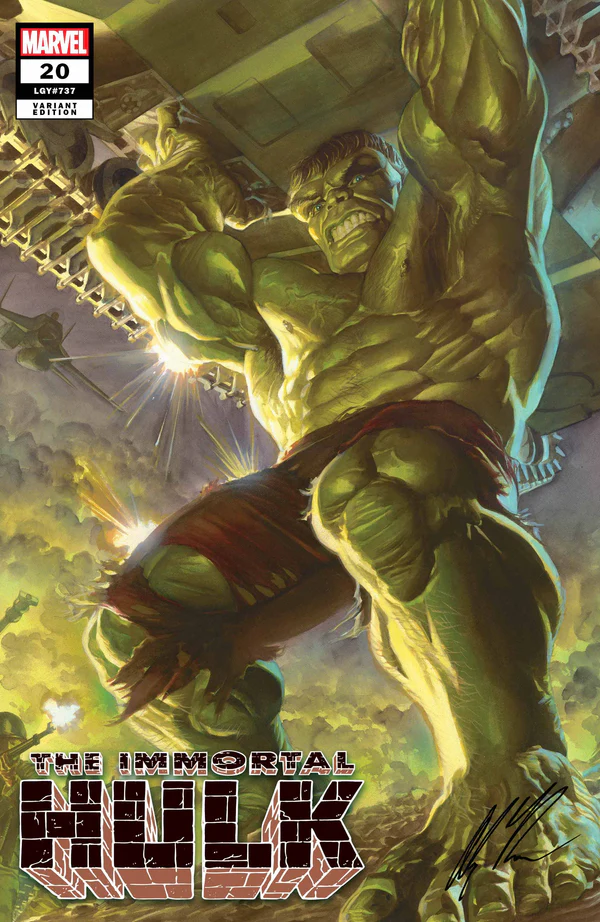
This is another variant cover, from the 2018 run of Hulk comics. As far as I can tell, Hulk is getting messed up with hell and gamma is, like, weird death energy? It’s getting away from just “big smash” and getting into “oh, you’re really a monster. Like, really”.

Also, I have to note that while doing research for this, I came across Immortal Hulk: Great Power, which is a one-off comic where The Hulk just kinda…leaves Bruce Banner and goes into Spider-Man. Loki did it. It’s not funny enough to be a big deal, sadly.
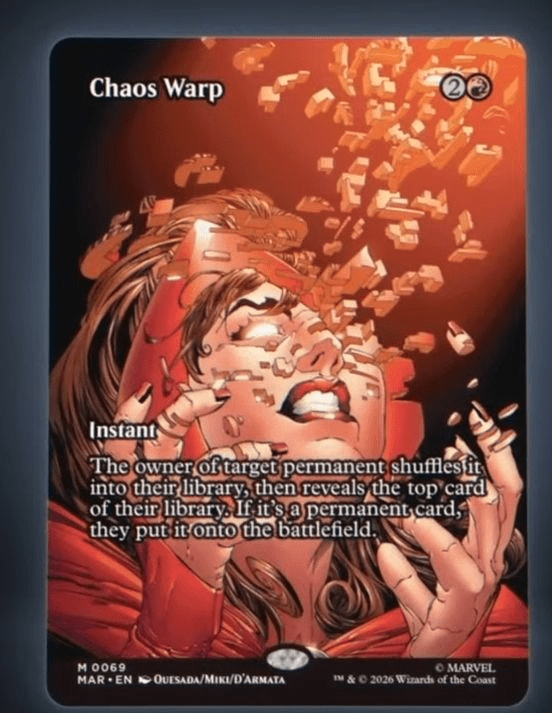
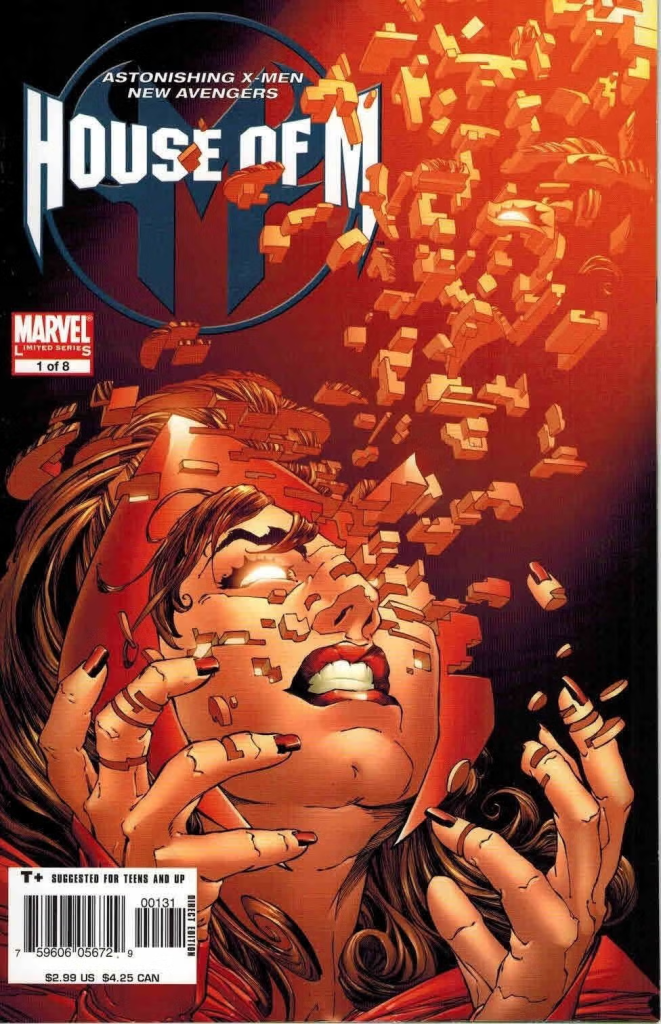
Another variant cover, this is from the first issue of House of M, a massive crossover event in 2005. Previously, Scarlet Witch, who had always been a bit of a wild card in the comics, had gone super nutty and blew up the Avengers, including killing some of them. People were Not Happy about this. They make plans to, you know, un-alive her, for the good of humanity. Which is a bit harsh, coming from a group that includes Cap, Strange, etc. So they go to find her, and then she goes all super crazy with reality magic and just casually remakes the world so that Magneto is in charge of the world and mutants are awesome and also she has kids and isn’t crazy. I can’t do this storyline justice, it’s wild.
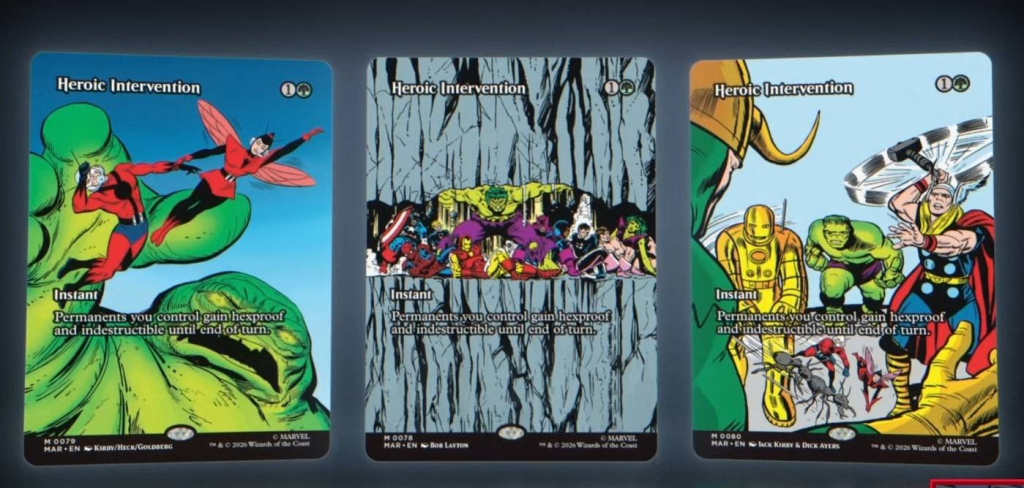
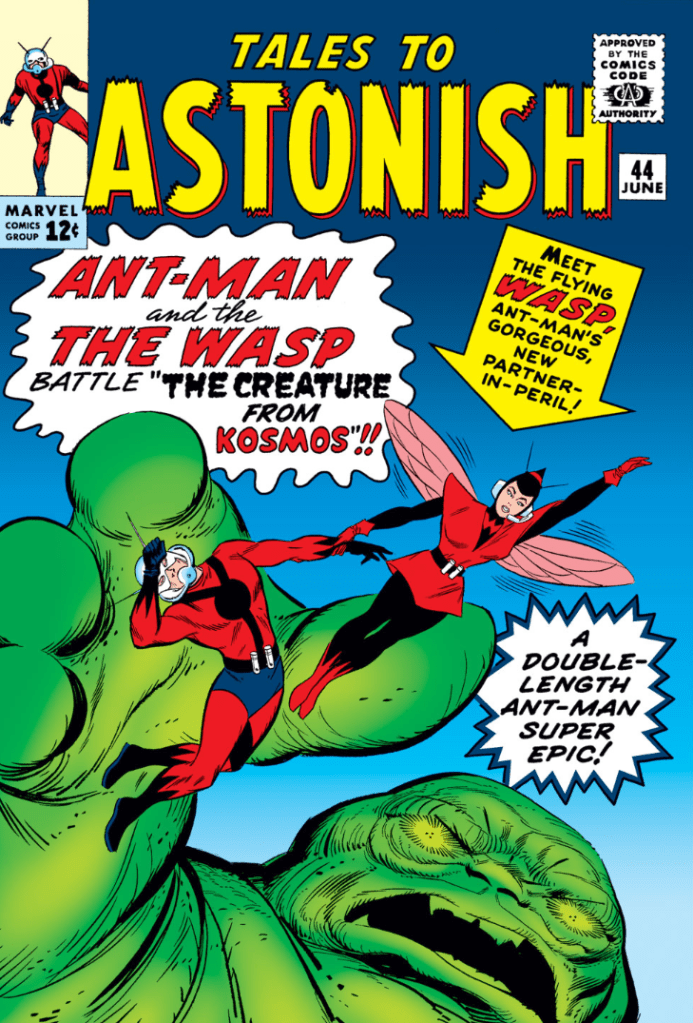
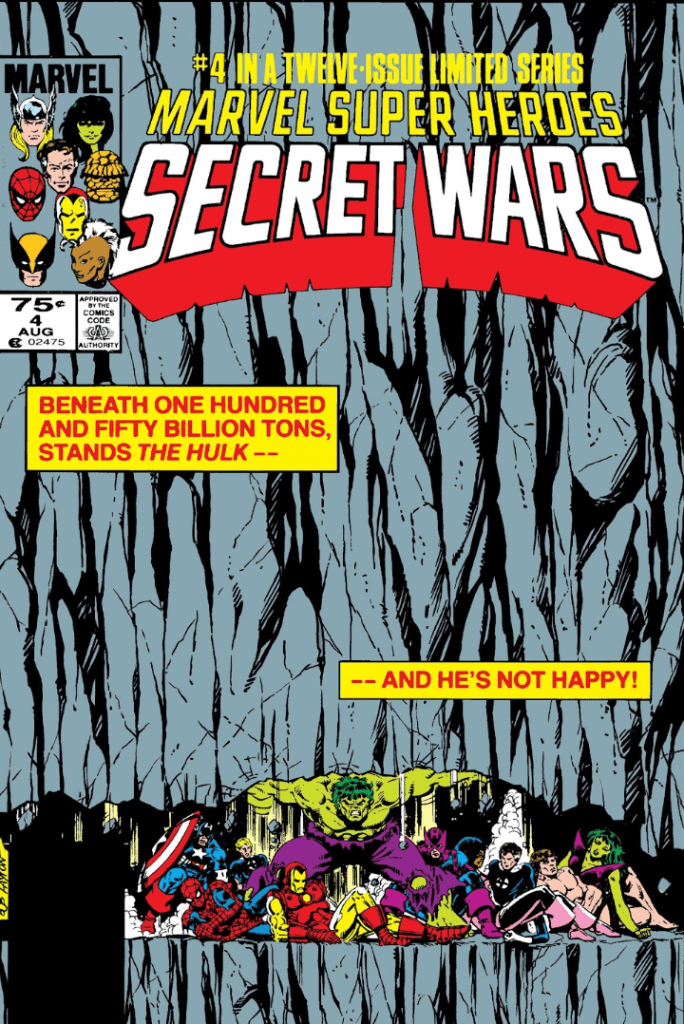
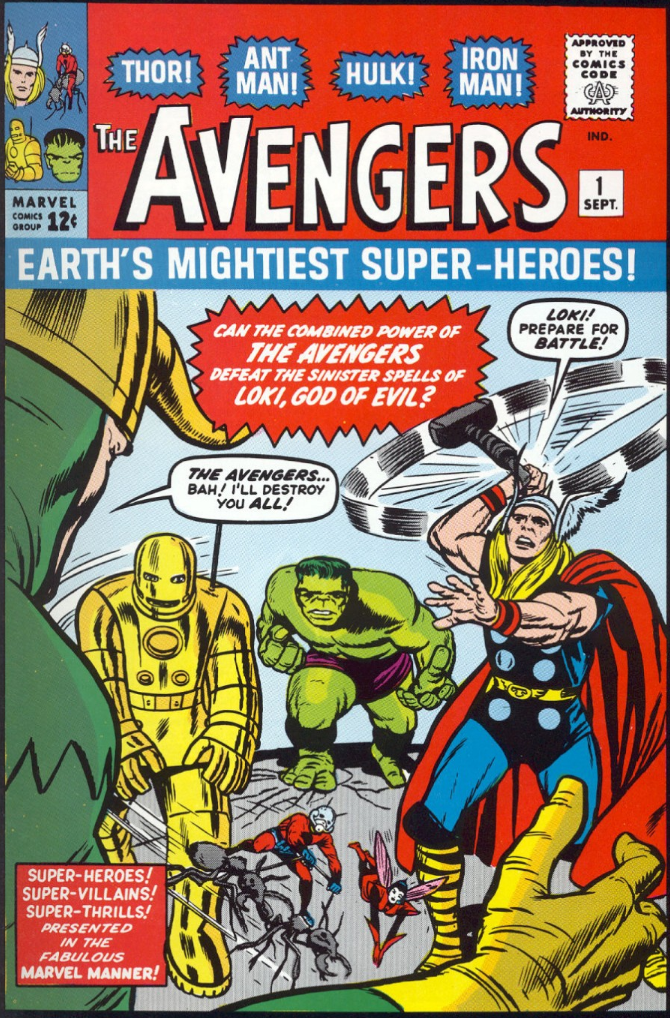
From left to right, we see the debut of The Wasp in Tales to Astonish #44, another series that just kinda had whoever they wanted to write stories about; Secret Wars #4, really the first major crossover event for Marvel, where cosmic jerks took all the heroes and made them fight all the villains; and Avengers #1, literally the first issue of the Avengers as an organization, possibly one of the most important comics to the future of modern media.
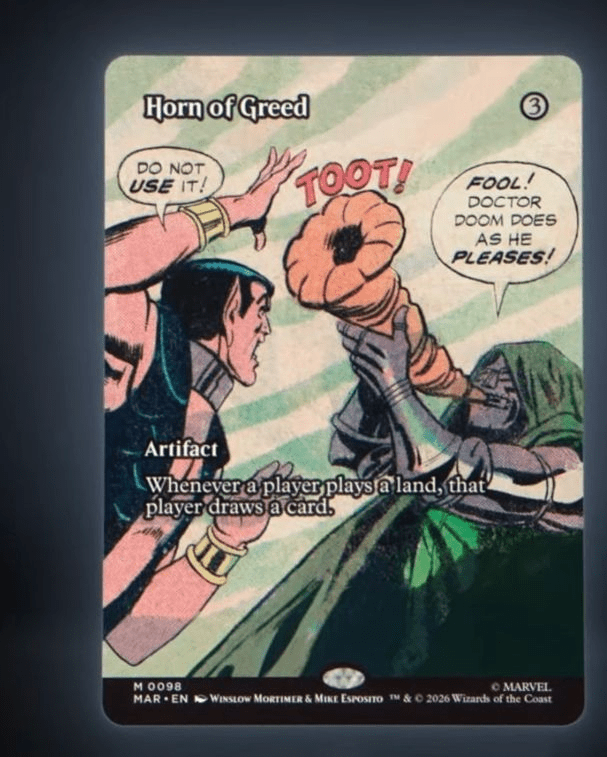
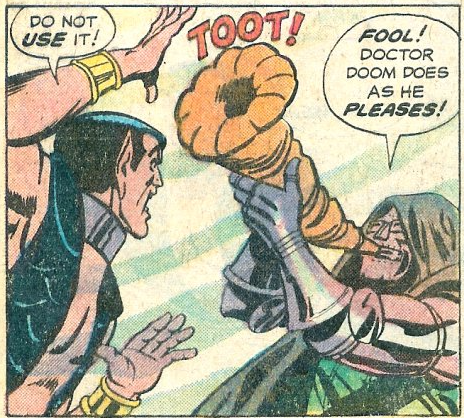
(Poke the second image to see it fully, WordPress is complicated.)

Ah, the meme image. We needed at least one of these. No, Doom does not toot as he pleases, that’s a quick photoshop job. Those astute viewers might be wondering why the dialogue seems much simpler here. That’s because this is from Spidey’s Super Stories #53, a collaboration with Marvel and The Electric Company. If you don’t know about The Electric Company, it was an educational children’s show, more advanced than Sesame Street but with similar sketch humor. It was also the first major gig for Morgan Freeman. Anyways, the Super Stories comics are aimed at younger kids, so the dialogue is very basic. Please, allow me one selection that is just comedy gold.
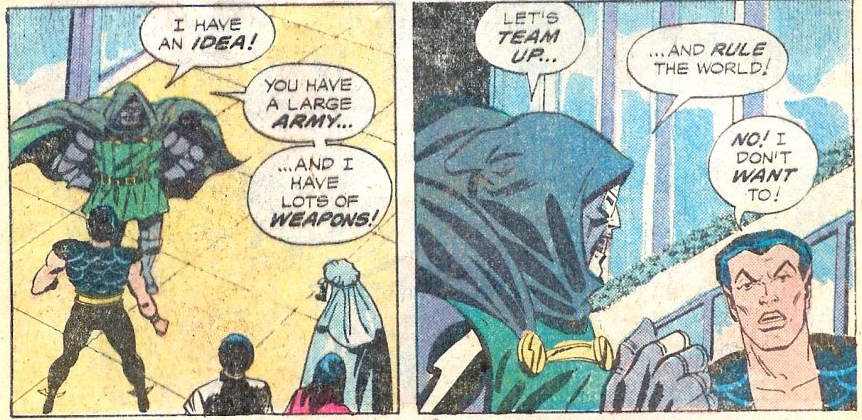
Absolute cinema.

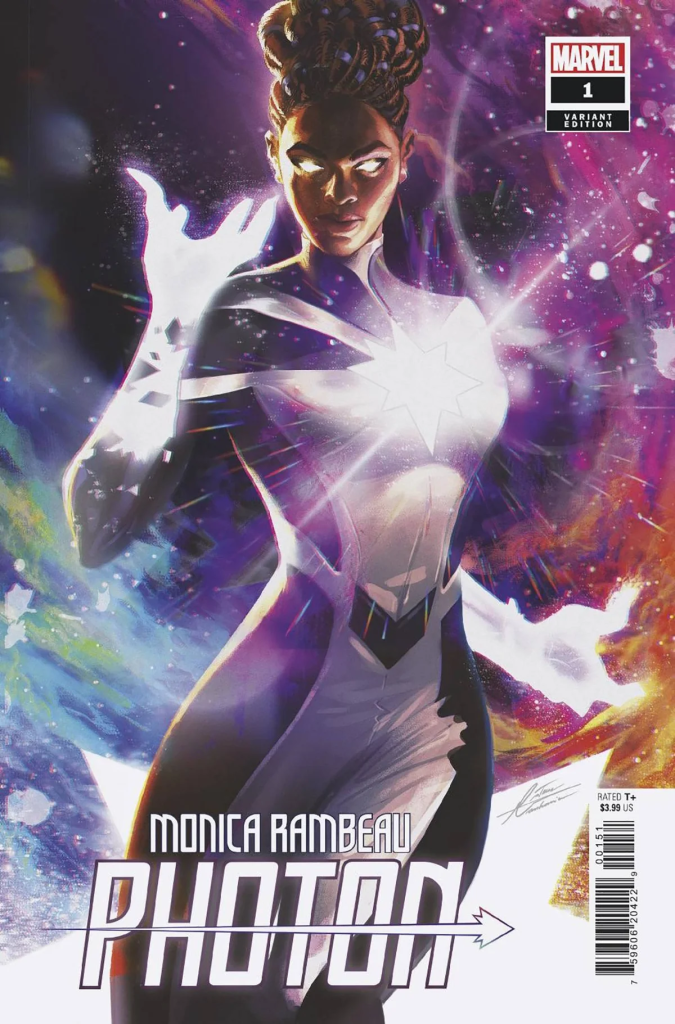
Well, we needed at least one modern hero for the kids to recognize from recent comics and movies. If you managed to sit through The Marvels, you’ll recognize Monica Rambeau, who is kinda Captain Marvel-adjacent. This is, once again, a variant cover. Not terribly interesting as a first issue goes, since she had her origin in a previous comic.
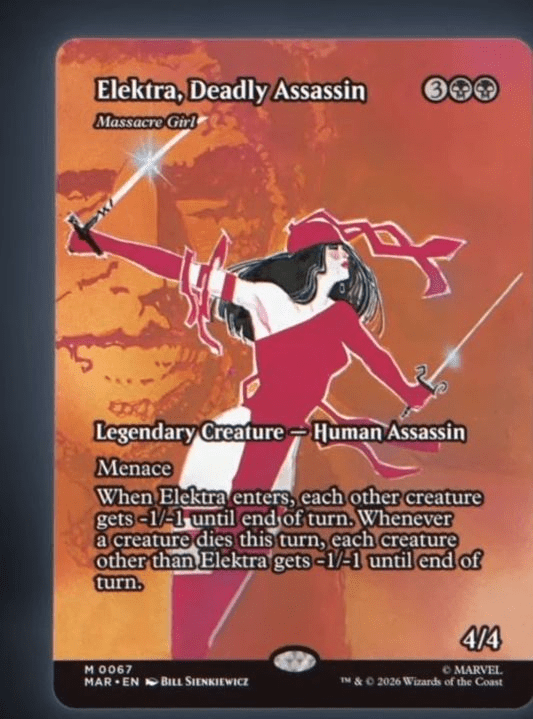
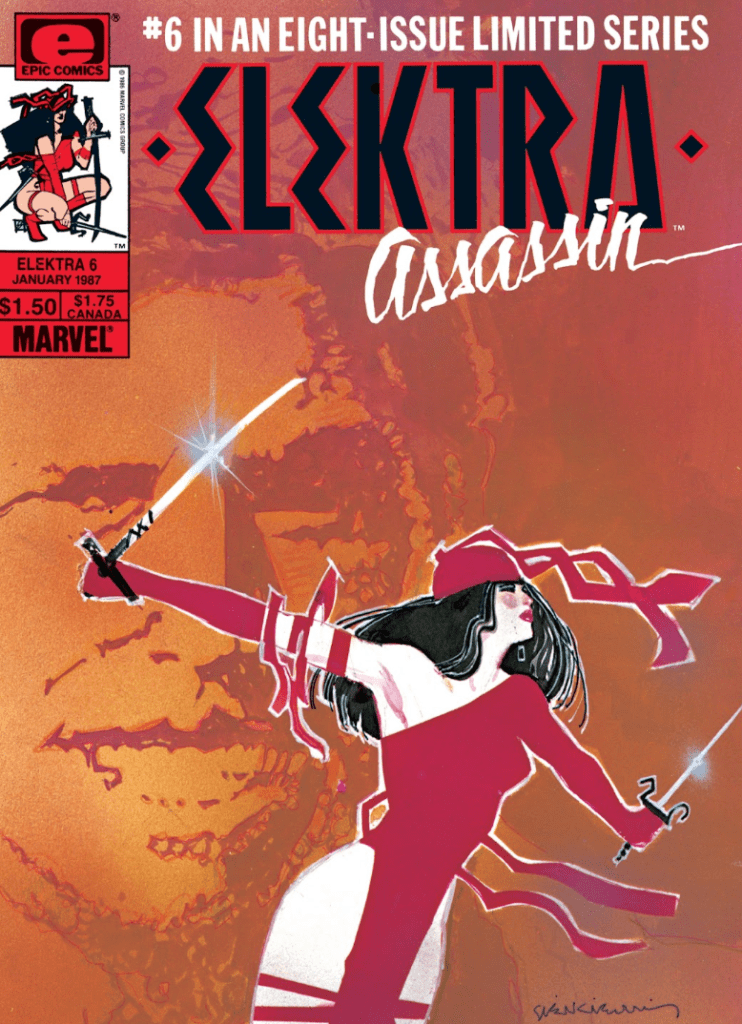
Elektra had been introduced in Daredevil previously, and got her own series eventually. Of note here is the Epic Comics at the top. A subsidiary of Marvel, they allowed creators to retain more rights than usual, and pushed more boundaries of good taste. This comic definitely has a wild art style and content, so that checks out.

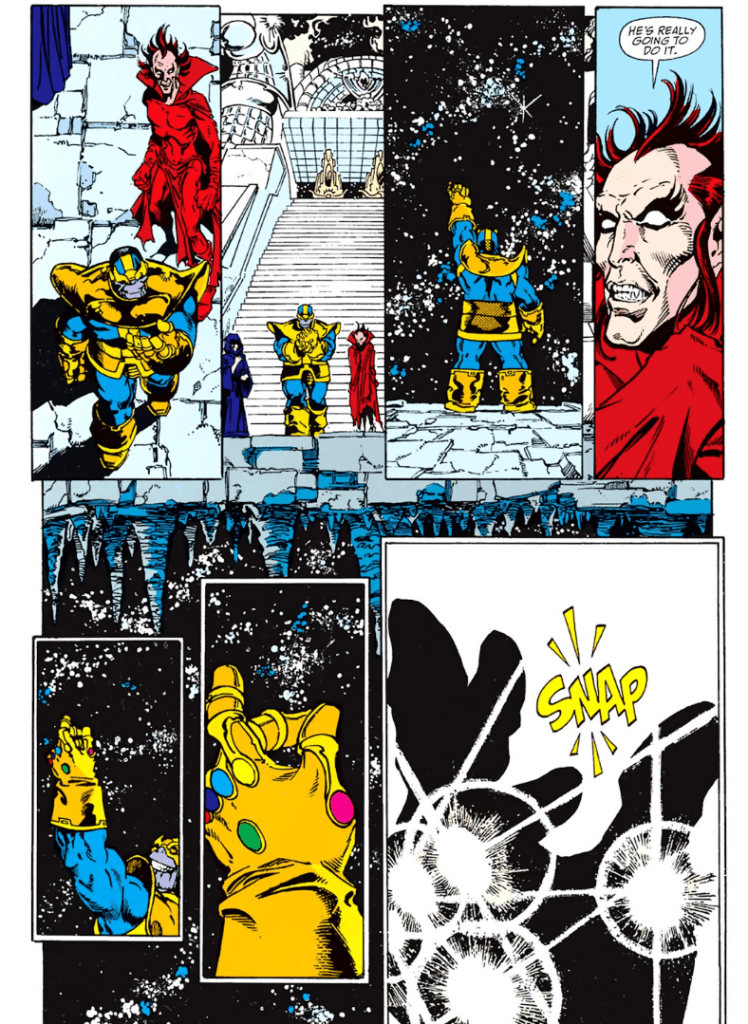
When the comics first covered the topic of the Thanos Snap, he didn’t even really have competition at the time. He had collected all the stuff, he was chilling in space, talking to Death about how much he wants her, and this imp advisor dude is kinda goading him. And then Thanos says “a good lover follows through on his promise to EXTERMINATE HALF OF ALL LIFE” and does it. Pow. This is issue 1 of 6, the rest of them are literally every power in the universe, and some new ones they needed to invent, trying to undo it. Yes, this includes Galactus telling him to knock it off.
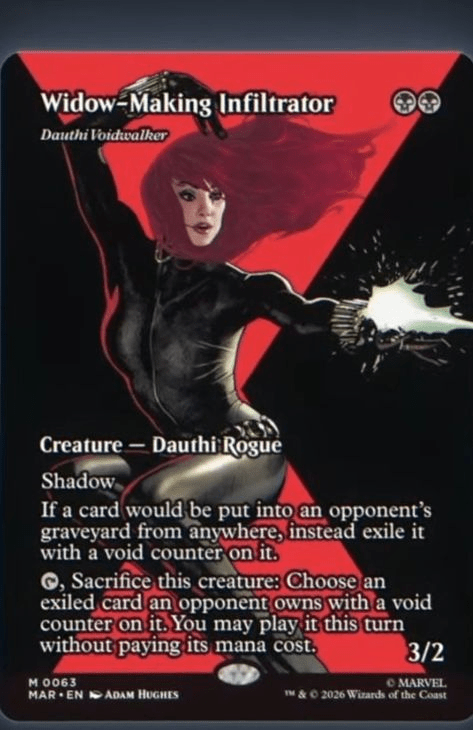
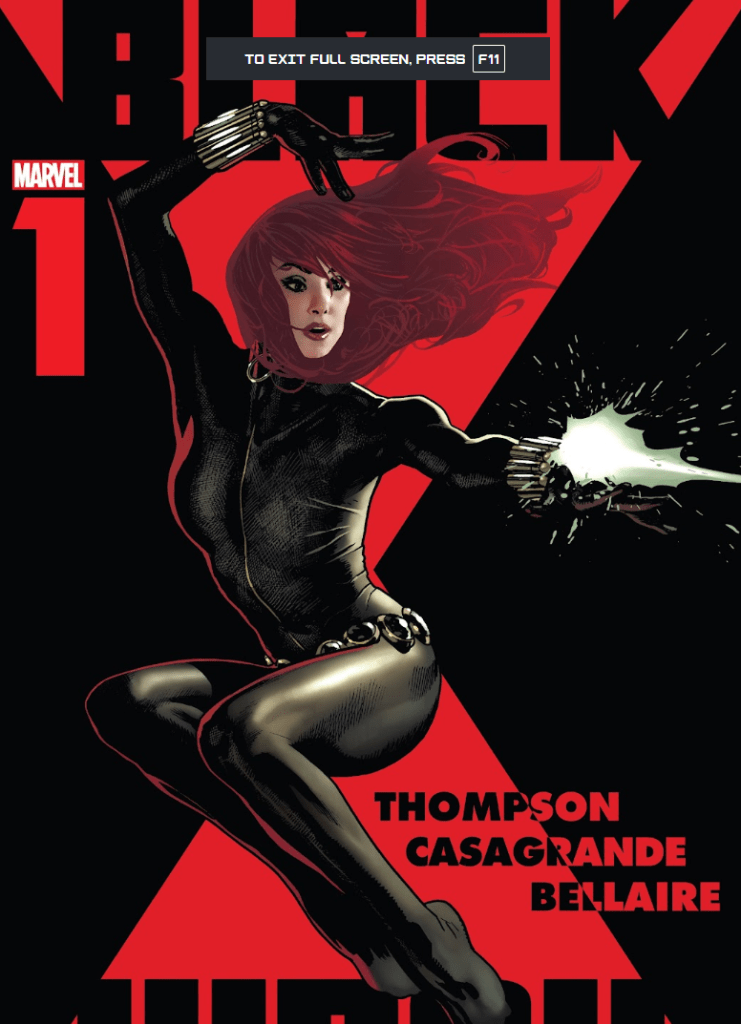
The first issue of the 2020 run of Black Widow comics, I suspect this particular one was chosen because it was a fairly nice shot of the character, without being too…you know…”comic book”. Trust me, you don’t want me to start dumping examples of how misogynist comic book art can be about lithe secret agents in skintight body suits.
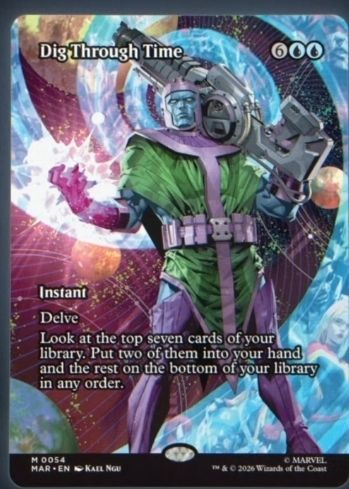
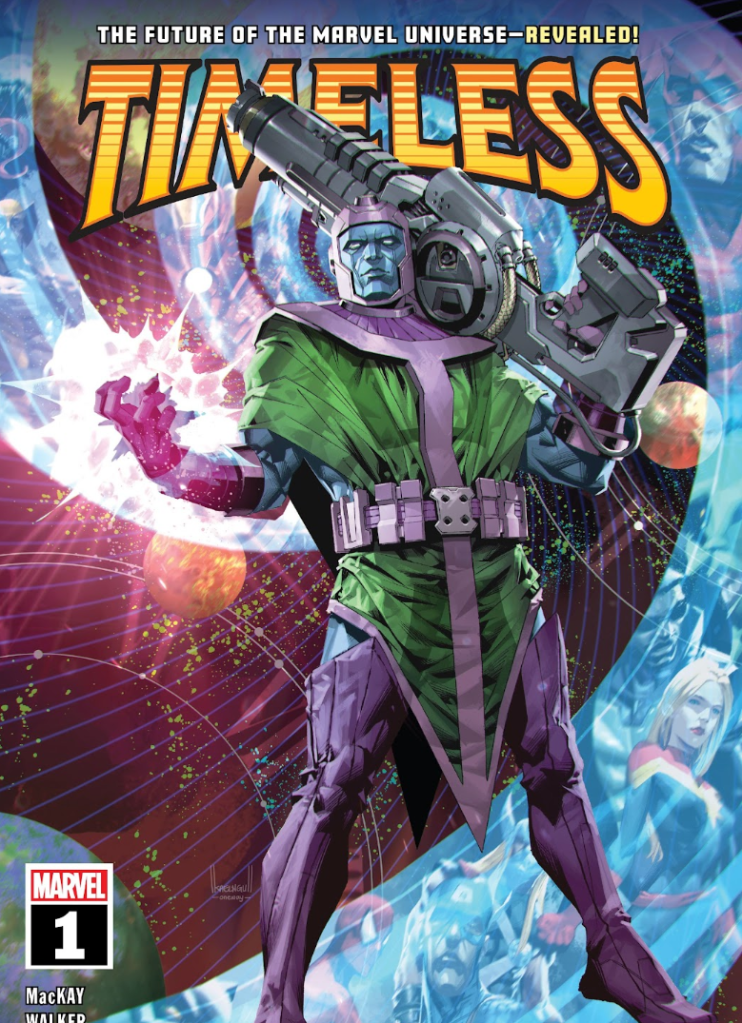
This here is Kang the Conqueror, recognizable from some of the Marvel media and proposed Big Bad until the guy playing him did some Not OK Stuff and got cancelled. Whoops. Anyways, the comic itself, Timeless, is a double-length issue, ostensibly following Kang around, but it also sets up plot threads that will be followed in multiple different comics. Yes, comics have been doing the thing that the Marvel Cinematic Universe does for decades, I’m surprised it took the movies this long to turn into a tangled mess of ads for the next project.

And I think that’s everything from the spoilers today. I’ll try and keep up to date when more drop, though if only one shows up, I might wait until there’s a few to post at the same time. Stay tuned!
Spider-Man Spotlights, Part 2

Another post, another round of comic book references to go through! Prepare yourself for some villainy! But we’re going to start with a few of the most iconic scenes in all of Spider-Man canon.

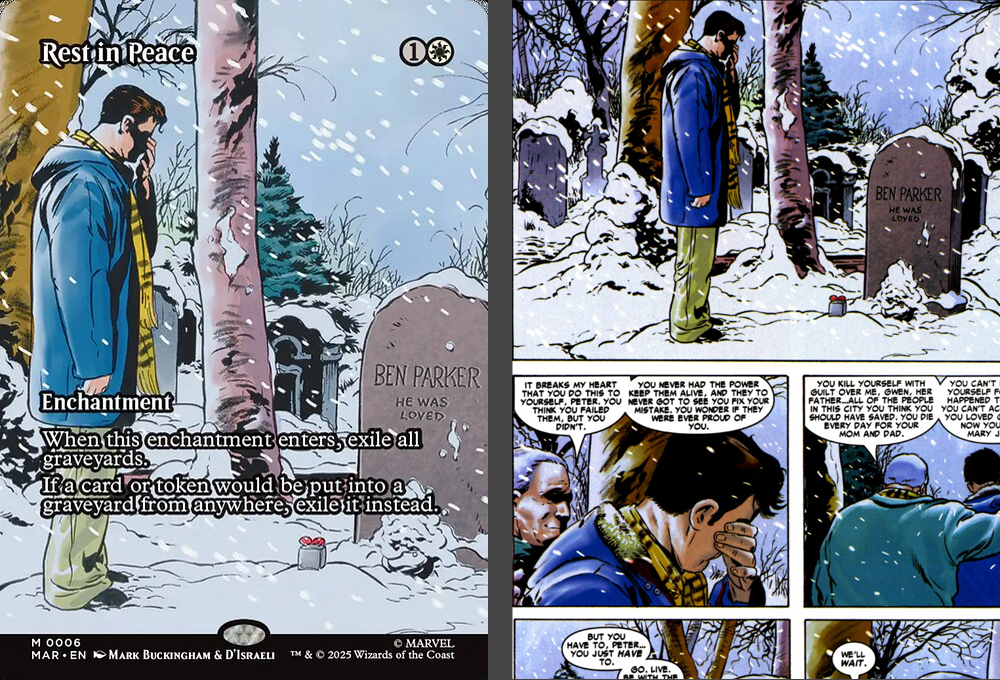
Source: Spectacular Spider-Man #27, April 20, 2005, pg. 18

You’re not seeing things, that is Ben Parker in the following panels. This is the last issue in this particular run of comics, and it contains side references to Calvin and Hobbes, looks back at what makes Spider-Man a hero, and an emotional farewell not just to Peter Parker’s inspiration, but probably a farewell to the journey of creating the comics by the writers and artists themselves; this is made crystal clear by the final page of the comic featuring not just a literal final act bow from Spider-Man and all his allies and villains, but also the artists in the background.

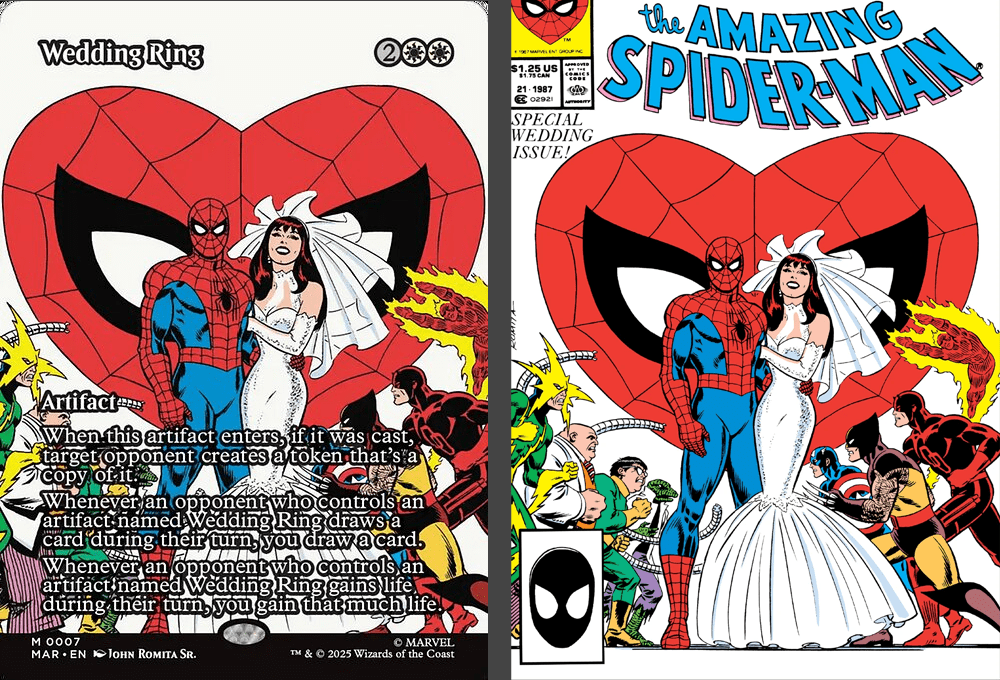
Source: Amazing Spider-Man Annual #21, June 9, 1987, variant cover

If we’re talking about a single most iconic cover from Spider-Man, it might be this one (or more likely, the traditional version where Peter Parker is in a normal wedding suit). Weddings rarely work in comics. Giving a hero a stable relationship removes a lot of potential for easy drama. Also, breaking up weddings is a very villainous act, so they often fail to finish. Peter Parker and the new Mary-Jane Watson Parker are rare among comic book characters; not only did they get married once, but across multiple retellings of the story, they keep finding each other.

Also an important note that will be relevant soon: Annuals were big storyline important issues, produced, well, annually, that were often twice as big as normal comics.

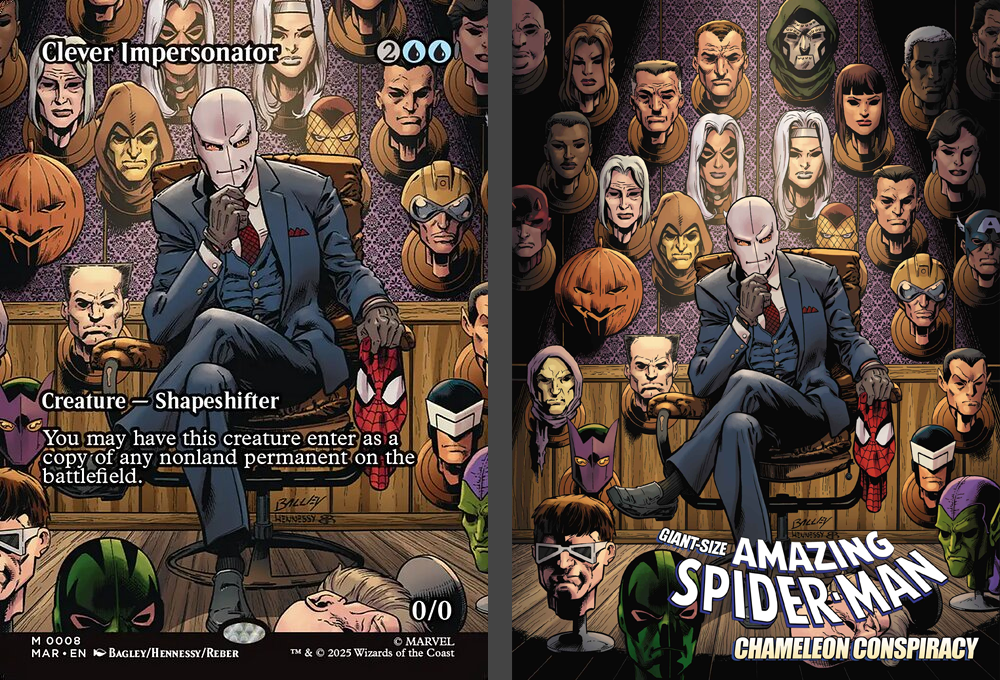
Source: Giant-Size Amazing Spider-Man: Chameleon Conspiracy, June 30, 2021, cover

While this isn’t necessarily an “iconic” image, there’s not a lot of them for Chameleon, whose superpower is the ability to not look like himself, so any important panel with him in it often doesn’t look like he’s in it. This issue is from the modern version of Annuals, taking place between the rebooted Amazing Spider-Man #69 and #70. Without reading too many comics on either side, it appears that Chameleon is not the only one who can do that. He comes from a secret child soldier program full of shapeshifters, and attempts to gaslight Peter Parker’s younger sister Teresa, who is a secret government agent, that she has been a shapeshifter the whole time. Comics are weird.

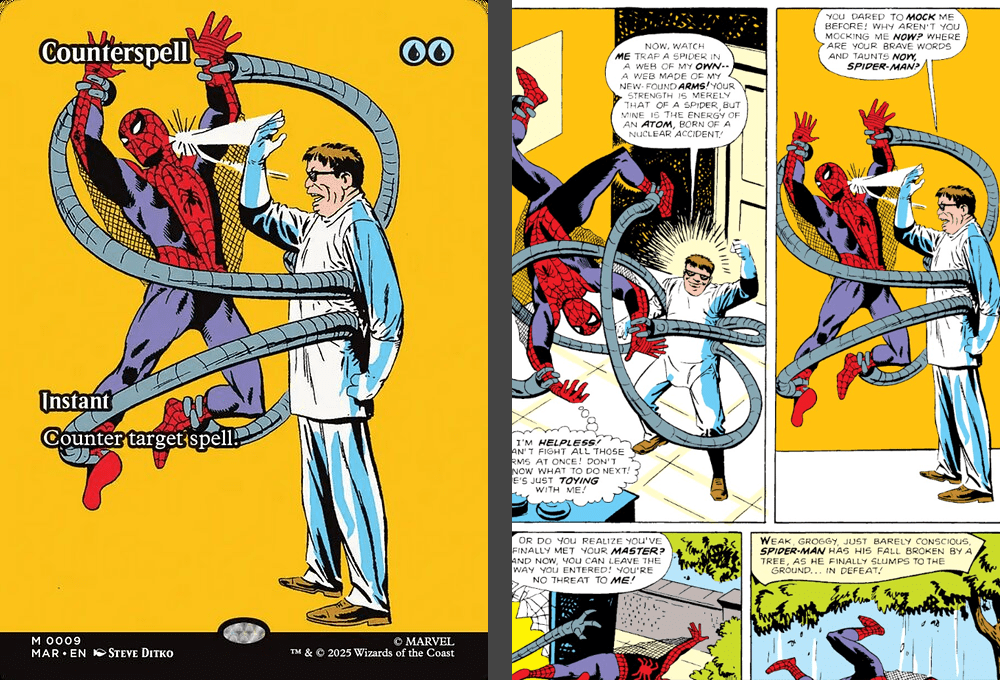
Source: Amazing Spider-Man #3, April 9, 1963, pg. 10

Going from not terribly iconic back to character-defining, this is from the third issue of Amazing Spider-Man, and the debut of Doctor Octopus. The background of the card is yellow because, as you can see, the background of the panel, and most of the fight panels before it, were yellow due to the yellow wall of the room they’re fighting in. Peter Parker then attends a guest lecture by The Human Torch, who provides the brand recognition and motivation to go back and win the rematch.

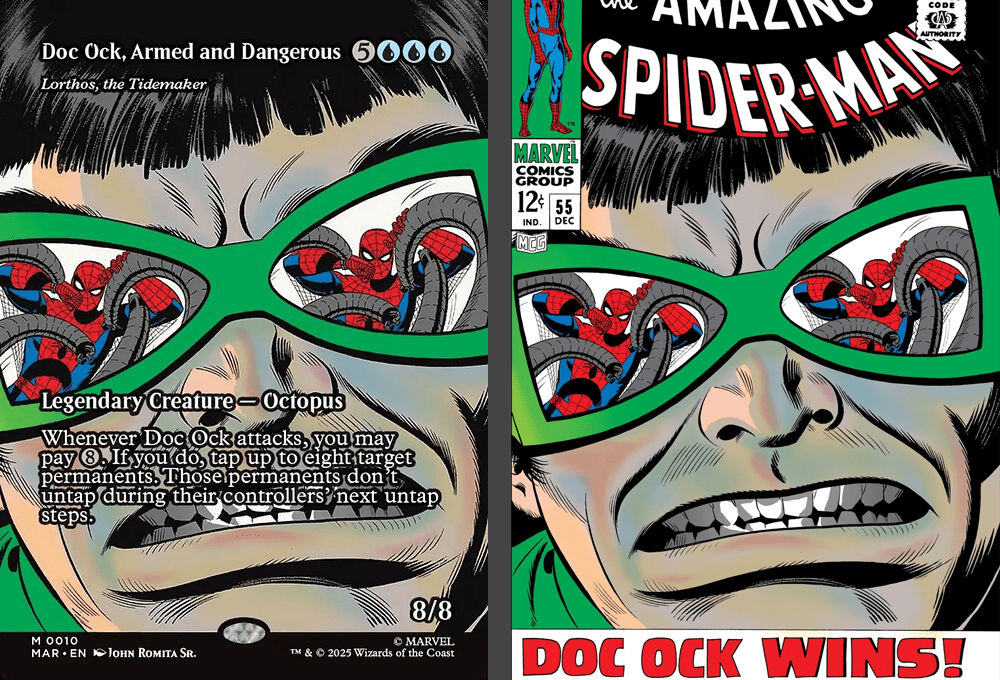
Source: Amazing Spider-Man #55, September 7, 1967, cover

Often, older comics will put something inflammatory on the cover in order to entice readers. The classic examples are those older Superman comics where Superman is being an asshole, and when you actually read the comic, it turns out the cover is a gross misrepresentation. So, does Doc Ock win in this comic? Yep, he shoots Spider-Man with a weapon called a Nullifier that disables all technology, and apparently causes amnesia, so he convinces Spider-Man that they’re allies. To be continued! (Spoilers, he kicks Doc Ock’s ass despite not getting his memory back, and J. Jonah Jameson considers the fact that he has no pictures of villainous Spider-Man to be a communist plot.)

Spider-Man Spotlights, Part 1

Spider-Man, as a property, provides a unique opportunity for Magic. We get to see a selection of some of the most iconic printed moments in Spider-Man history. I collected most of these, just as pairs of images, but I’m going to go a bit more in-depth on each one. Either why it’s iconic, or at least something interesting from that comic. Again, starting with five at a time, just so it’s not a massive wall.

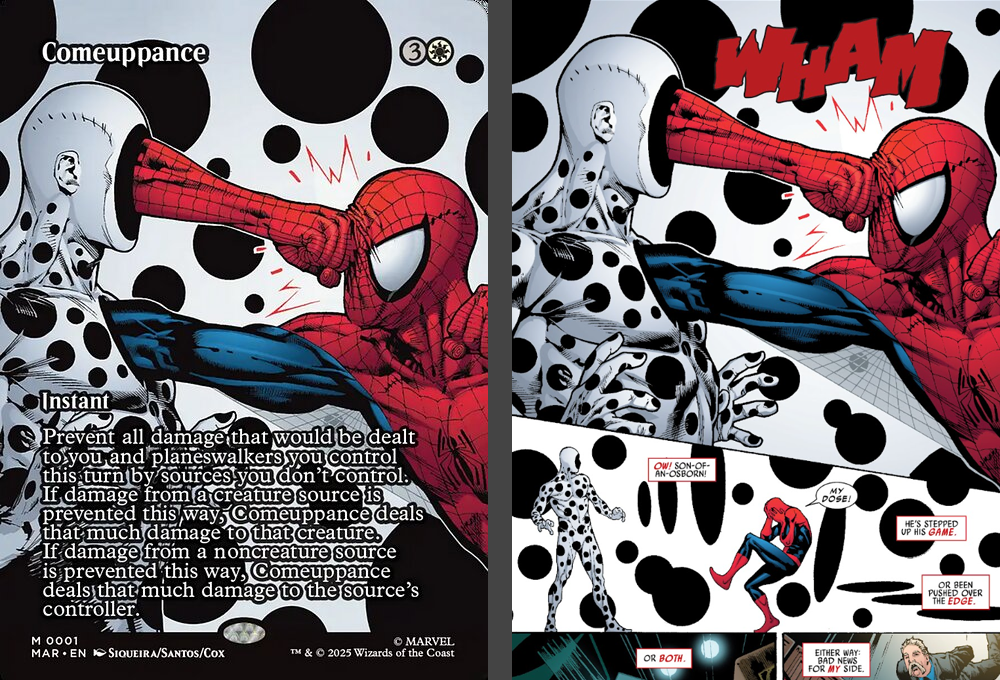
Source: Amazing Spider-Man #579, March 25, 2009, pg. 15

Most of the media spotlight cards utilize iconic covers. This one is from the return of The Spot, who hadn’t been seen for a while. The Spot has had a resurgence recently due to his role in the new Spiderverse movie.
Aunt May’s charity is approached by Russian mobsters that want to use her for good publicity. Peter investigates the mob, but is disrupted by The Spot doing a murder at them. He has to protect the head of the gang.
Pages 7-8 include a Rocky and Bullwinkle reference. Parker is seen using a Syno camera, a parody of Sony. And, most notably, on page 12, Spider-Man tries to talk like Christian Bale and struggles with the gravely voice.

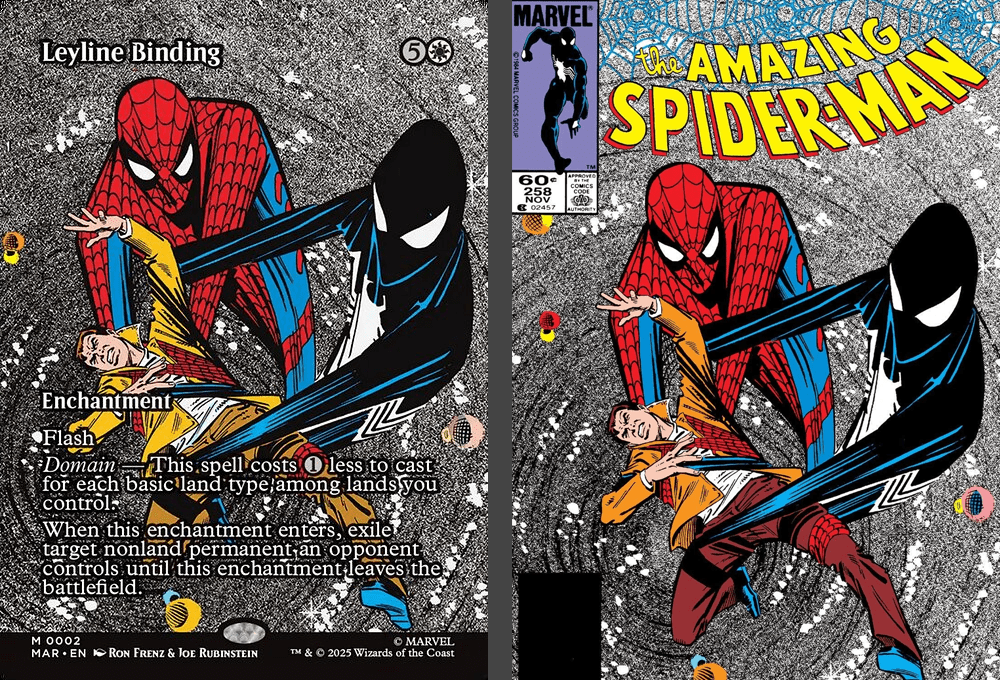
Source: Amazing Spider-Man #258, July 31, 1984, cover

This is not just an iconic cover, but a pivotal issue in the plot. MJ is just a friend, Black Cat is his girlfriend, all that good stuff. But most importantly, Marvel Super Heroes Secret Wars had just taken place, the storyline where Peter Parker first acquires the alien symbiote suit that would go on to be Venom. In order to figure out what is going on with his suit, Peter goes to the Fantastic Four, but needs to remain anonymous, so when he takes his suit off, he wears an old F4 suit and a paper bag, thus marking the first appearance of the Bombastic Bag-Man as seen on the super fancy printing of Spectacular Spider-Man.

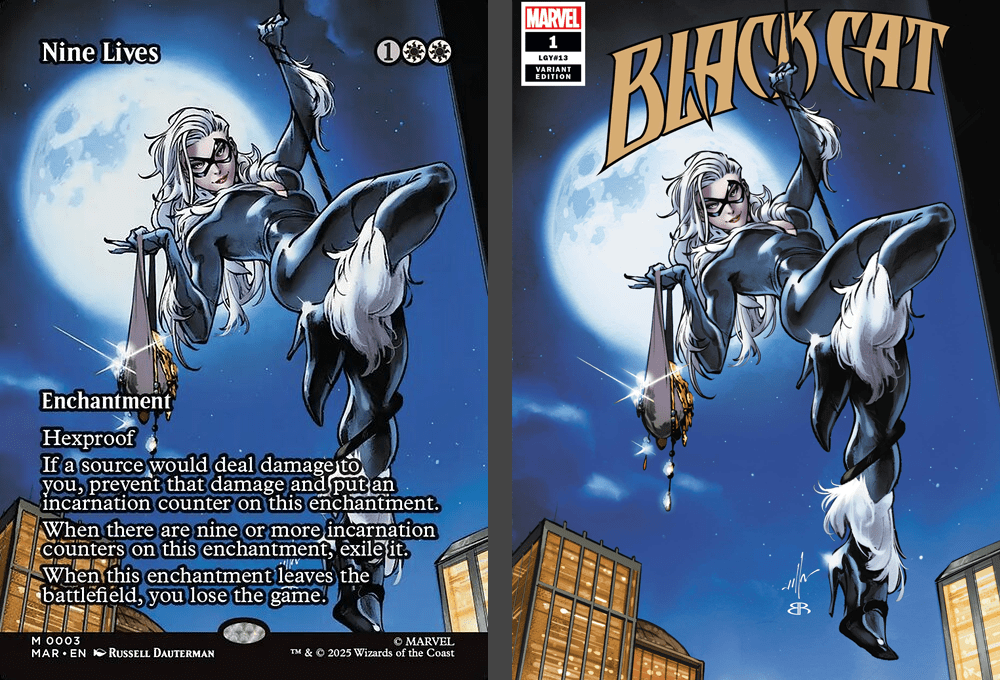
Source: Black Cat 2020 #1, December 16, 2020, variant cover

While not the first Black Cat-centric comic, a cursory glance at other iconic Black Cat covers and individual pages reveals that it’s very likely this one was chosen because Black Cat is often drawn very…un-family friendly, and this one gets you a nice cat burglar pose without too much T&A. This ten-issue run takes place during a major Marvel crossover event when Earth was being invaded by an army of symbiotes, and Black Cat was doing some anti-hero-ing.

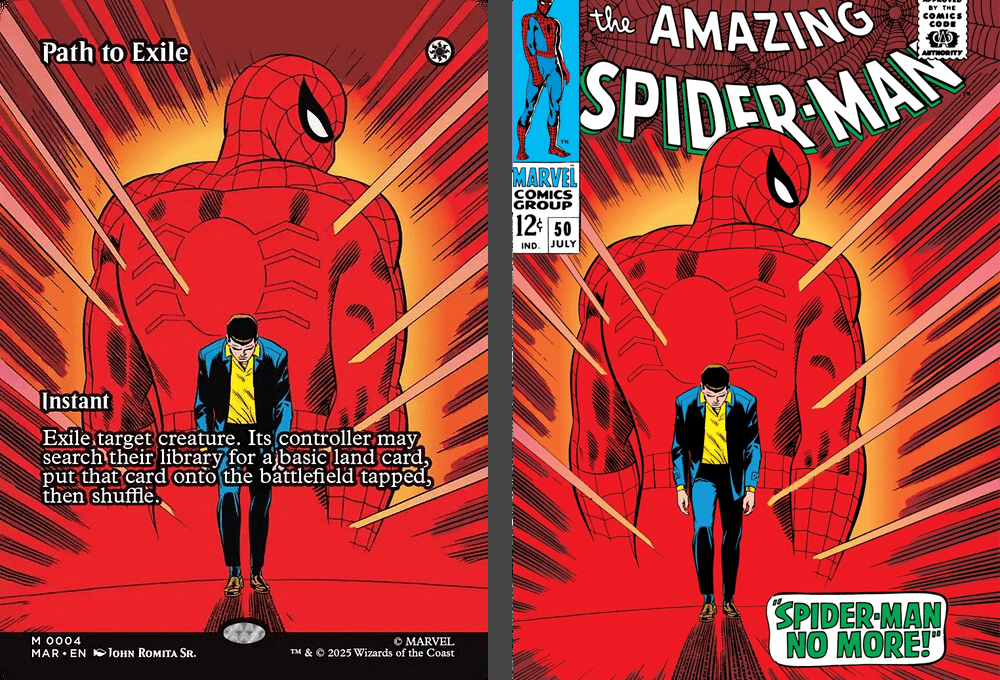
Source: Amazing Spider-Man #50, April 11, 1967, cover

If we’re talking about iconic Spider-Man covers, I’d put this in my top 5. The first milestone comic, being number 50, obviously a big story climax had to happen here. And they didn’t disappoint; Aunt May is very sick, he’s struggling in school, Gwen Stacy is flirting with him, and J. Jonah Jameson is starting to get under his skin. So Peter makes the ultimate decision. He dumps his suit in a trash can, in another iconic image. This lasts about 15 pages, when he saves a night watchman who looks like Uncle Ben and then has a big emotional roller coaster.

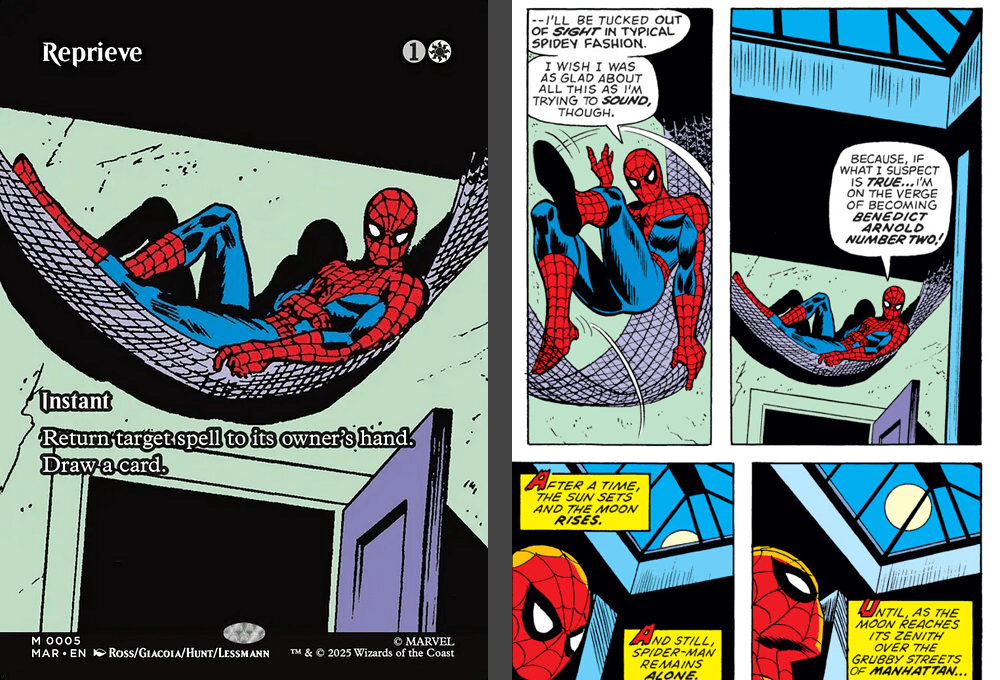
Source: Amazing Spider-Man #136, June 11, 1974, pg. 11

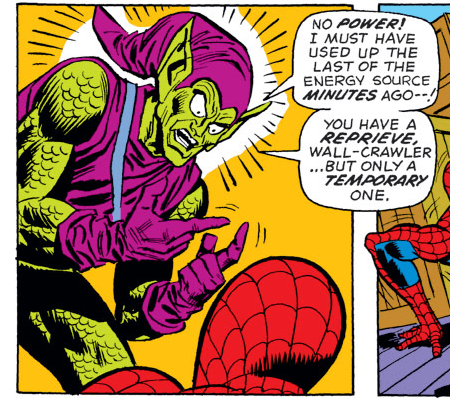
Green Goblin had been slain 14 issues earlier. But when a very identifiable explosion puts MJ in the hospital, Spidey is convinced that despite Norman Osborn being dead, the villainous Goblin is still around. So he goes to Goblin’s old hideout, finds it full of dust, decides to see if it is fake dust, finds out that it is, and establishes a stakeout. By creating a web hammock and just waiting. 6 pages later, as Harry Osborn (spoilers if you haven’t read any Spider-Man comics or didn’t watch Spider-Man 3) is about to finish him off, the Goblin runs out of power in his suit. Here’s what he has to say about that:

Wonder if that’s why they chose an image from this comic…also, that’s basically the end of the issue. Goblin runs out of power and runs away. Big let-down.

Anyways, that’s the first five of forty (holy crap, there’s forty of these) special cards to look at. I hope you like the context for each one, and stay tuned for more of my insane rabbit holes I have to go down to try and find the source for unlabeled individual panels.

The Art of MtG Spider-Man, part 1

I’m going to start by putting aside any discussion of card quality, necessity of printing, cost of cards, anything like that. This post is not a forum for my opinions on the state of the game. I’m just here to look at the art on the cards. Who made them, what else they’ve done across Magic and other properties, are there any cool references, things like that. We’re here to celebrate artistic achievement.

There will also be criticism of any non-standard frames, alt-art styles, anything that messes with the normal layout of the card. Some of these are great, some of these are problematic.

Oh, this also might not be an exhaustive list. So many people make art for Magic, I’ll try to highlight the most interesting ones, but you should support everyone (who doesn’t get caught plagiarizing). I’m also only doing 5 at a time, so I can put these out at a reasonable pace, rather than wait a while and put out a gigantic post.

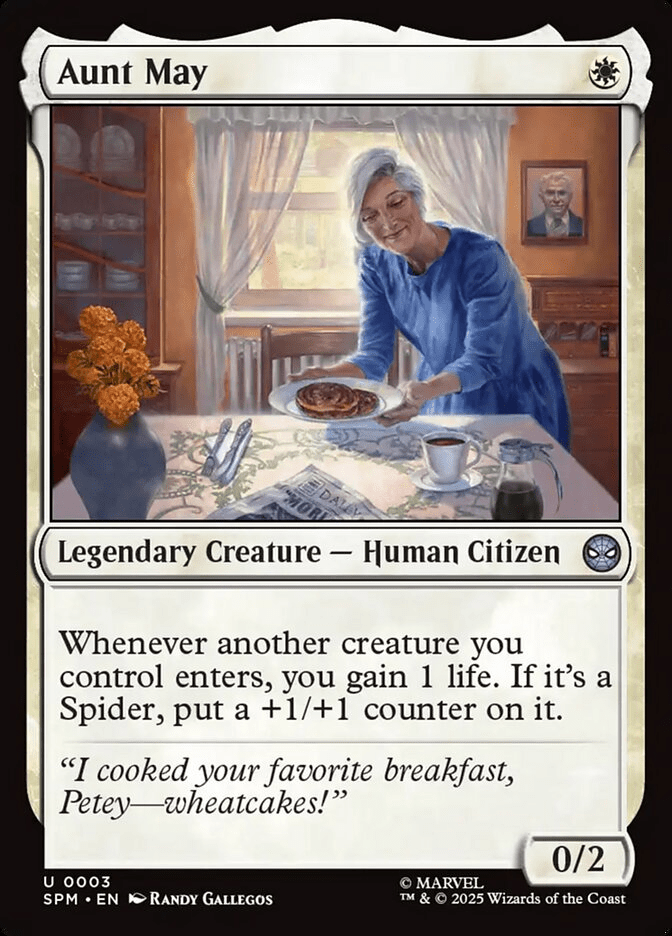
Let’s start near the top of the alphabetical list with Aunt May.

Randy Gallegos might be familiar to anyone who has been playing Magic for a while. A lot of the artists that draw for modern Magic started relatively recently, but Randy is part of the old guard. Nemesis all-star Accumulated Knowledge? There’s Randy. Excellent reanimation spell Dance of the Dead? Randy again. The very first printing of Shock? It’s your boy. He’s been drawing Magic history for decades.

Also, shoutout to his art series Hearts for Hardware, a series where he paints classic video game hardware. Now I want a Secret Lair with the Sega Dreamcast in it.

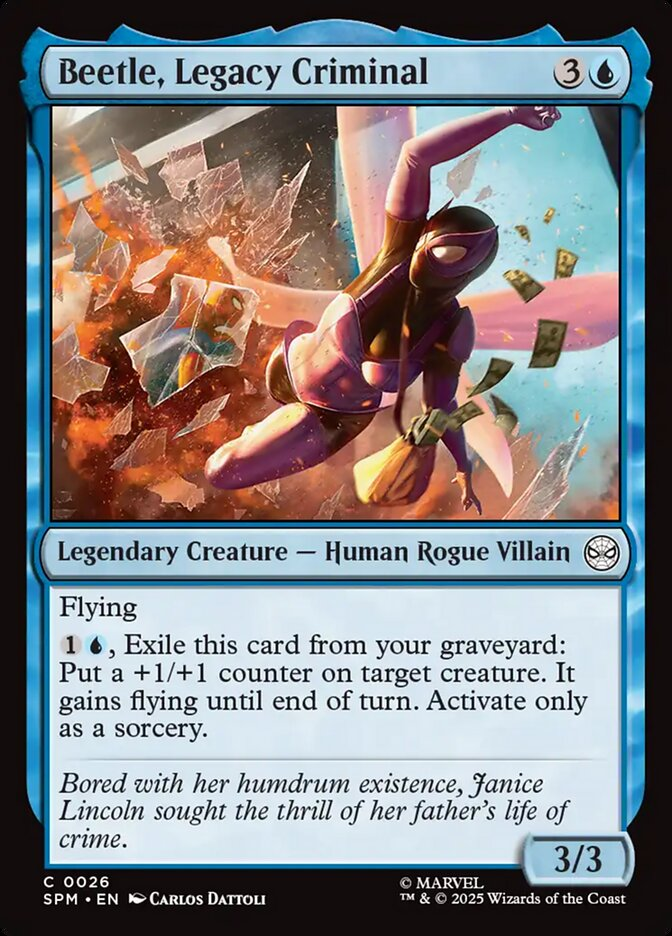
All right, who’s next? Ooo, Beetle.

Carlos Dattoli has only done four cards for Magic, all for Spider-Man. This is a good sign that he’s done significant work elsewhere, and indeed he has. Looking through his ArtStation profile, looks like he’s done a lot of Power Rangers comic covers, along with some splash art for Marvel and TMNT. Time will tell if we’ll see Carlos again for the TMNT set.

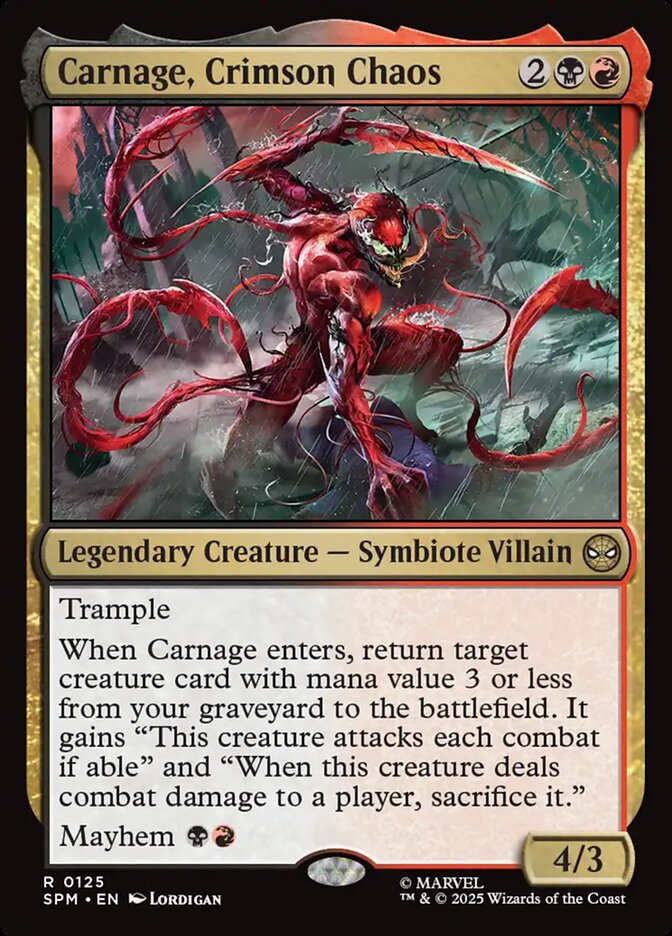
How about some Carnage?

That’s an interesting name, Lordigan. His real name is Pedro Sena, and if you couldn’t guess from the art on this card, Lordigan draws some pretty metal artwork. No, really. Album covers for metal bands. Here’s his ArtStation profile, but be prepared. It’s very pointy.

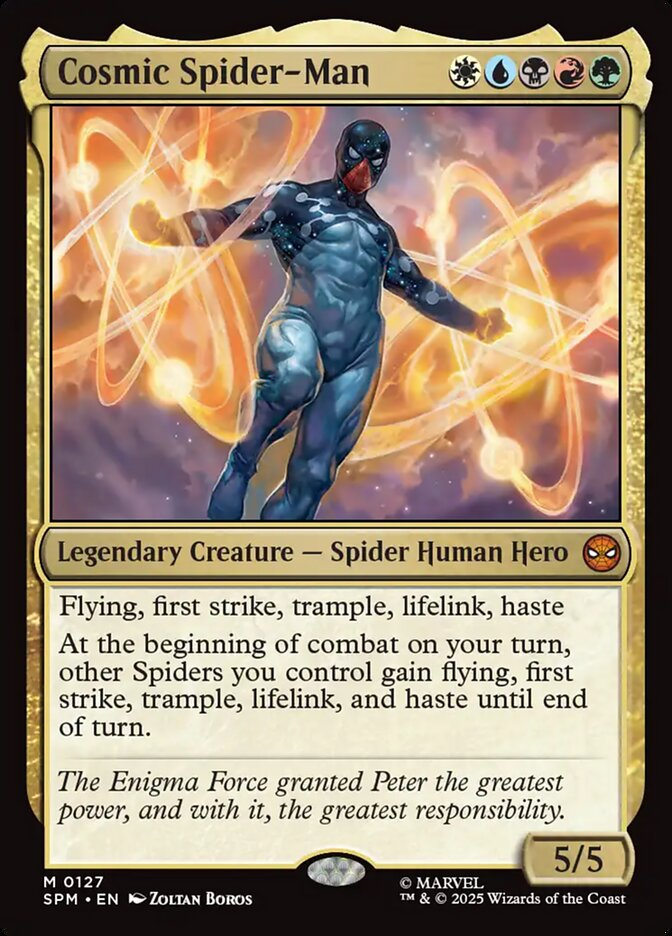
Time for another big splashy card with fun art history, Cosmic Spider-Man!

Again, those with an eagle eye will look at the artist and say, hey, wait a minute. Boros…like, the color pair? Oddly enough, that’s a coincidence, like Doug Bowser being the president of Nintendo America. But he is one of the longest tenured artists for Magic. At time of printing, Scryfall has him on almost 400 cards. Highlights include the Boo token for Minsc and Boo, classic cEDH annoyance Dargo, and a snazzy store league promo Soldier token. I’ll get working on my token appreciation posts eventually.

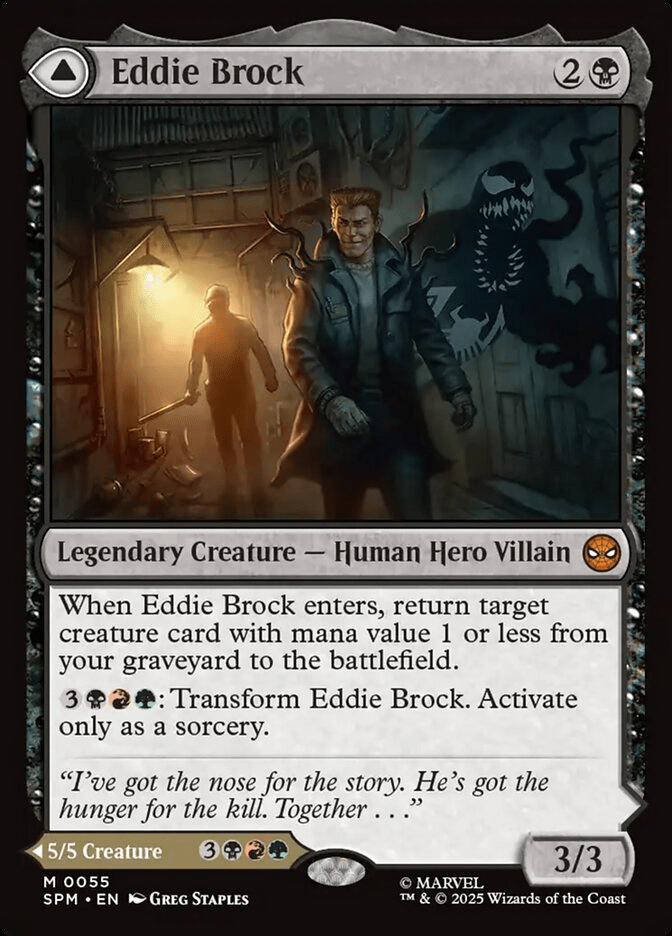
OK, one more, who is it…Eddie!

Another serious Magic veteran, Greg Staples is also on over 300 cards. Some of them are, in fact, staples, or at least fairly iconic. Baneslayer Angel, Buried Alive, and Chain of Smog, and that’s just on the first Scryfall page. He’s also know for a bunch of Judge Dredd comic book art.

All right, that’s the first five I’m going to look at. Right now, I’m working my way through Spider-Man, while collecting info about Avatar, Lorwyn, and TMNT as they become available. Expect those to start around the time that the full set spoilers are released.

Plus, I’ll be doing a deep dive on the history of tokens, so I can start up a post-release series on the tokens that each set adds to the game. How useful they are, should they slot into specific archetypes or general token strategies, etc.

I’m coming back, folks. I need stuff to keep me focused, and I think talking about Magic is that thing, at least for now. I’d appreciate feedback. Do you want me going more in-depth on artists? More examples of non-Magic artwork they’ve done? I’m here to make it happen.

See you next time, and remember, as much as the game changes, the art is always cool.

It’s a Dilapidated Boat!

I can only deckbuild for so long before I have to make a meme list. This will be a lower power than my previous decks, by a fairly significant amount. It’s not that much cheaper either, so you need to make sure that your group is OK with you goofing around with boats. Got it? Cool.

Boats.

Decklist

Commander

It’s Skeleton Ship! It’s garbage, it’s old, and it’s not even a boat on paper, just a Skeleton. Don’t worry, we’ve got more than enough boats coming up later.

Mana

For a deck like this, you’re going to want to be landing decently expensive spells, plus activating abilities, so we can afford some of the bigger mana rocks. Some decks don’t need to go higher than Commander’s Sphere, but here, I think that going all the way up to Gilded Lotus and Thran Dynamo is perfectly reasonable.

Card Draw

You’ll see plenty of cards here that draw cards and also proliferate, since the commander puts counters on creatures and you want more counters. There’s also Canoptek Spyder and An Unearthly Child, which don’t seem to synergize with counters much. Hmmm…

Removal

This is probably what this deck does best, as far as useful things is concerned. The commander makes creatures smaller, and this section makes them even smaller, or spreads the damage, or in the case of Crumbling Ashes, directly blows stuff up. OK, done with that, here’s why we’re all here.

Winning the Game: BOATS

OK, this technically isn’t great at winning the game, but your goal is to clear away your opponent’s stuff, then hit them with boats. So many boats. Most of them aren’t super great. But that’s the goal of a meme deck. You get to show opponents cards they’ve never heard of, and sometimes even get to win with these unknown cards. Boats, ships, barges, skiffs, karves, galleons, schooners, even a submarine. All sorts of boats to kill people with.

There’s also a section of Boat Crew. One of them is a creature that goes to get a vehicle, and the rest specifically have untap abilities. Since you need to tap a creature to crew a vehicle, having creatures that can untap themselves means you can crew multiple boats with the same creature, or have access to their ability multiple times in a turn.

Misc Top 3

There’s so many boats, there’s only three cards in this section!

  • Necroskitter. Kill your opponent’s stuff and take it for your own!
  • Nest of Scarabs. Whenever you do what your commander does, get some tokens to drive boats or block damage.
  • Spitting Dilophosaurus. Oh boy, a Jurassic Park card. But it’s a very good way to get creatures out of the way, making sure even big creatures can’t block.

Land

Nothing fancy, just make sure that you have enough islands for Pirate Ship.

$130 isn’t too bad, it might be a bit much for a meme deck, and I get that. I think it has potential, especially at a more casual table. Plus, getting to smack people around with boats is always fun.

Getting Colder

Well, I said I was going to do this, and I knew this might happen. The first set with any legendary creatures was Legends. And then the next three releases had none. The Dark, Fallen Empires, and the core set Fourth Edition came and went with no new additions. Then, finally, mercifully, they printed Ice Age. 373 new cards, “fixed” dual lands, snow-covered basic lands that could be used for different effects depending on the cards you played…and four legends. Four.

Can’t I skip this one? Are any of them good?

…crap.

Total Options

Like I said, there’s a whole four of them, so I can actually talk about each one without feeling like I’m wasting time. One is a meme, without question. One is halfway between meme and powerful. One is objectively great. And the last one is SKELETON SHIIIIIIIIIIP.

Power

Let’s talk about the good one, and the sorta good one.

Marton Stromgald is a tiny man for a not insignificant cost, and he doesn’t get bigger. In fact, he does the opposite. He makes all your other creatures bigger. A lot bigger, since red is very good at making a lot of creatures quickly. The downside of this is, Marton is probably charging forward to his death. If you can keep him alive, though, you can run all manner of mono-red strategies. Goblins, elementals, dwarves, tokens, Good Stuff, whatever you want. Marton will make them hurt.

Merieke Ri Berit is, like many cards of her time (insert a long aside about Time Vault here), balanced around not having access to cards that we have access to now. The intention is that she is a one-time use theft. You tap her and take someone’s creature, and then she never untaps, clinging to that creature. If she ever goes away or untaps, the stolen creature dies. But at the time, there weren’t really any good ways to untap her. They existed, yes, but they were not good. Compared to Rubinia from Legends, which didn’t destroy the creature but could untap and take a new one, this seems like a step down.

But time has passed, and now there’s a ton of cards that untap your own creature. Hell, there’s a land that does it (shoutout to Minamo). A modern Merieke commander deck is not going to let you keep any creature worth having.

If you see one of these two as a commander, you’re in for either a huge beating, or a slow attrition game, depending. 7/10.

Memelord Potential

And then there’s the other two.

General Jarkeld switches blockers. That’s it. And he’s mono-white, so you don’t really get much access to “OK, I swing with one huge dude with trample and one little dude, hehehe gonna switch your blocks”. It’s an on-board trick, so your opponents can play around it. Anyone playing this guy is here to do shenanigans.

Skeleton Ship is objectively crap. But I can’t deny it. It’s a Skeleton, but not a boat? It only has the Skeleton creature type. Let’s look at the ability. Modern cards have plenty of ways to untap your commander, as stated with Merieke, and also cards that interact with counters on permanents. Is it a bad commander? Eh…there’s plenty of more efficient choices. Is it a fun choice? Yes.

Another important note: this is the first printed Legendary Skeleton, made in 1995. As of this post, there are 5 total Legendary Skeletons (sixth coming extremely soon). The second was printed in 2010, and is such a pox on the format that most playgroups shun anyone who plays it (sorry, Skittles, it’s the truth). So the second reasonable option for playing a Skeleton deck came in 2020. That’s 25 years of Magic history where the only reasonable Skeleton to lead a Skeleton deck was this dopey boat. It took until 2023 to get a Skeleton that was blue and black.

Memelord potential: Skeleton Ship stonks are declining, so we’re down to 3/10. A few years ago, I’d say closer to 7/10 just for the Ship.

Now which one of these awkward misfits am I going to build a deck around next? At least I don’t have a lot of choices, and I’m probably not going to go to the General and save some time. 50/50 odds says it’s gonna be boats. Stay tuned.

Revolving Door Graveyard

A style of deck I really like is the Revolving Door. The concept is that one area of the game, usually the graveyard, takes in cards, and then those cards either pull other cards back out of that area, or they pull themselves back out, creating the Revolving Door that keeps spinning, cards in, cards out. The deck then uses this cycle in order to generate resources.

Usually, you want to play black to pull this off (my current version is white and black, but I have a black and green version cooking). However, we’re here on White Deck Week, so how can we pull this off without black? We go back to what white is good at: lots of little creatures.

Decklist

Commander

I had trouble choosing a deck to make; this is part of the problem of making too many decklists. Ideas start to run dry. But then I ran into Teshar, Ancestor’s Apostle. When you cast a historic spell (it’s going to mostly be artifacts, but there’s some quality legendary spells), you get to bring a cheap creature back to the battlefield. 51 of the 100 cards in the deck are eligible to be brought back by this ability, and another 34 will be lands. And of the 15 other cards, 10 can be recovered by a subsection of cards that we’ll get to later. 5 one-time use cards, and one of them is Teshar themselves.

Mana

The mana section is a little scattered. You’ll notice a complete lack of cards similar to my previous deck. No creatures that enter and check if your opponents have more lands. Instead, we’ve got a smorgasbord of how artifact creatures can make mana. Some of them tap for mana, a poor man’s Llanowar Elves. Some sacrifice to go get lands, a poor man’s Sakura-Tribe Elder. And then there’s the real heavy hitters. Foundry Inspector, Jhoira’s Familiar, and Starnheim Courser discount the artifact spells you want to be casting, and then we throw money at the problem with the expensive, but well worth it Krark-Clan Ironworks, allowing you to not only put artifacts into the graveyard for later recovery, but making the mana needed to replay one from your hand.

Card Draw

Mentor of the Meek continues to be one of the best card draw creatures available, and this deck gets immense value out of Esper Sentinel. Being so artifact focused, Losheel and Sanwell are both great options. The rest of the card draw suite either draws when it enters or when it dies. And then Trading Post just does everything we want in the deck. Sacrifice a creature to get back an artifact to cast and bring that creature back. Sacrifice an artifact when there’s nothing left to get back and just draw a card.

Removal

OK, the white creature-based removal on small creatures is not great. There’s plenty of creatures that exile a creature until they leave the battlefield, but that’s just creatures. This is where all of the one-shot spells that we can’t get back go. There’s a few we can get back, like Skyclave Apparition (which is just a good card) or Loran of the Third Path, so it’s not all one and done. There’s even repeatable graveyard hate, which is ironic considering that this deck folds to someone messing with our graveyard.

Winning the Game: Build the Door

There’s two Winning the Game categories again. The first one is more straight forward. These are cards that allow you to start beating people in the face. Cyberman Patrol is a wild card that means if you’re attacking with small creatures, it’s less damage to not block them. Cards like Patchwork Automaton allow you to make one big creatures, while Steel Overseer lets your fleet of little creatures get big and problematic. There’s a little bit of everything. Some unblockable, some indestructible, some blimps. But this is just the first part.

The second part is The Door. Cards whose purpose is to bring cards back from your graveyard themselves. For artifacts, these require themselves to die, which is why the deck runs multiple ways to sacrifice your own artifacts (best one is Arcbound Ravager and it’s not even close). So the loop generally looks like this:

Play Loop Creature A (creature from Winning the Game B). When you do, Teshar brings back some other useful creature.

Sacrifice Loop Creature B. When it dies, bring Loop Creature B back from your graveyard to your hand.

Play Loop Creature B. Teshar brings back some other useful creature.

Sacrifice Loop Creature B. When it dies, bring Loop Creature A back.

And so on and so forth. This will be a strain on the mana, which is where those three discount creatures from the Mana section are really helpful. You end up, at minimum, playing a lot of spells in one turn, but it’s possible to play a theoretical unlimited number of spells in a turn, creating very large creatures that your opponents will have difficulty dealing with.

Misc Top 3

  • Selfless Spirit. Protects all your creatures from dying for a turn, and then next time you play an artifact, get it back and protect them again. There’s a few other protection options here too.
  • Daxos, Blessed by the Sun. Whenever you basically anything with this deck, you gain life. It’s a good way to stay alive.
  • Grinding Station. Technically, you can use this in the Revolving Door combo, but it also allows you to fuel your own advancement by putting your own cards into your graveyard so you can get them back later.

Lands

Nothing too special here. I’d recommend to play the five lands that are also artifacts, just because they’re cards you can get back maybe later from your graveyard. Buried Ruin is another nice include as a random way to get something back when you have no other gas in your hand.

This deck is fairly low-mid budget. Moxfield calls it about $230, and around $100 of that is three cards: Esper Sentinel Lita, and Krark-Clan Ironworks. Sentinel and Lita can probably be skipped; Ironworks is really really good here, but to save money, drop it and the other two to make the deck closer to $100 total. I know that you can make decks for $50 or less, but for me, I consider around $200 to be a good normal amount for a single color, maybe two color deck. Once we get to the three, four, five color decks, the deck cost will inflate simply due to the lands. Until then, enjoy the cheap decks.

A Loaf of White Bread

For the second color option for a Commander deck, we have the first of the five colors, which is only a little confusing. For a fairly arbitrary reason, the colors of Magic are, in order: white, blue, black, red, green, which loops back to white (which will be important around 15-20 weeks from now). Each color has their own general identity, which is expressed well by the following question:

What is the best way to achieve success?

(Note: if you want to really get into the deep trenches of Magic color pie theory, go listen to the podcast “Drive to Work” by Mark Rosewater, head designer of Magic. I’m going to absolutely ruin his beautiful metaphors with my simple words going forward.)

Anyways. White believes that the best path to success is by working together, and removing obstacles to progress. There is strength in numbers. In gameplay, this is expressed by:

  • Making a lot of small creatures instead of one big one
  • Preventing your opponents from doing too much, so everyone is on the same footing
  • Blowing up just about any kind of card in play

Can white do other things? Of course, this is just the general idea. If you see a white card, there’s good odds that it’ll be basically in line with this philosophy. That being said, let’s take a look at my take on a white deck.

Odric “Build-An-Akroma”

Individually, most small creatures aren’t very good. Sure, they can have a few useful abilities, or maybe get bigger later. But most of the time, they need help from other cards to get actually dangerous. So I employ Odric, Lunarch Marshal to build a team out of a wild variety of creatures, turning those small creatures with random abilities into powerhouses, with tons of abilities.

Decklist

The decklist isn’t organized into mana, card draw, removal, and winning, like I will discuss here. Instead, it’s divided up by abilities, because that’s the goal. Odric works by giving abilities to all your creatures, as long as one creature has it. So if I have one creature with flying and six that don’t, Odric makes it so now I have all seven with flying. Some abilities are rarer; there’s not much haste, but there’s a lot of flying and vigilance. But you can really make some wild combats if you can get the right creatures out.

Mana

White is very good at putting threats into play, and getting rid of problems. This comes at a drawback: white is not good at ramp or drawing cards. I’m running three cards that make my spells cheaper, and the rest of my mana acceleration comes from white’s style of ramp. If an opponent has more lands that you do, you can get a land and catch back up. In Commander, there’s lots of ways for your opponents to get more lands, so this is almost always successful.

Card Draw

White doesn’t get traditional “pay mana, draw cards” options, it’s almost always tied to doing something else. Either punishing your opponents for being too aggressive (Mangara, the Diplomat draws cards when opponents play extra spells or attack a lot), or advancing your own board state (Rumor Gatherer draws you a card if you get two creatures in a turn). Well of Lost Dreams is an interesting inclusion, but with so many ways to give all your creatures lifelink, you can easily use all your mana to refill your hand.

Removal

I should be running more removal. Sometimes, you run into cards that can’t be removed. There’s some redundant options in the deck, and I should add in cards like Banisher Priest, creatures that don’t provide extra abilities to the team, but get rid of problems. One of the benefits of me going through this blogging exercise is getting to look at my decks and honestly assess what I’m missing.

Winning the Game: Send Dudes

This deck starts putting pressure on the board as soon as you can get Odric out. If you’ve played two creatures so far, you’ll be attacking with two flying lifelink vigilance double strike creatures early in the game. There’s a lot of creatures that look wimpy, but because they have multiple abilities, they provide a large boost.

Misc Top 3

  • Ascend from Avernus. When they blow up your stuff, just get it all back.
  • Odric, Master Tactician. If you attack with enough creatures, you choose how your opponents block. So you can choose that they don’t block.
  • Concerted Effort. Redundancy for Odric’s effect, with the benefit of also providing protection, which can be insanely powerful.

Lands

The land base is actually a really good place for a white deck to get access to card draw and removal, if you can believe it. Four lands can draw cards, two prevent damage, two get you free stuff, and two make creatures. Of course, none of this would be even reasonable to hope to get without the powerhouse that is Weathered Wayfarer. It doesn’t get you mana any faster than usual, but you get your land every turn, and you can get any land you want.

I really like this deck. It’s quick, fairly unique, and allows you to play a lot of cheap creatures. My colorless deck is over a thousand dollars; this one is $250, and a significant chunk of that is the lands. Even with the decreased price, I have as much success with this deck as with the other one. A fantastic mid-budget option.

The Oldest School Deck

Making decks for a Legends legend is not easy. There’s not many good cards to choose from, so the good decks have been pretty well established. And as much as I know I can do it, I don’t want my first deck in this series to be a goofy meme. It should be at least reasonable. So I picked a Commander that was overlooked in my previous article.

Decklist

Commander

At first, I didn’t give Gwendlyn Di Corci enough credit. Tap to discard a card? There’s commons that do that now. But there’s two major differences. The first is that she’s your Commander, so you have ready access to the effect. And the second, which is significant, is that the discard is at random. Most effects either allow you to look at your opponent’s hand and choose a card (which are often on one-shot spells), or your opponent gets to pick (these are often repeatable effects). Random discarding has a chance to absolutely ruin your opponents’ plans.

Mana

Blue, black, and red don’t usually get great mana acceleration. What’s nice is that Gwen only costs 4 mana, so you don’t need more than one acceleration spell to get her out a turn early. 3 Signets, 3 Diamonds, Arcane Signet, Commander’s Sphere, Sol Ring. Standard artifact ramp package, nothing fancy. We’ll get to actual fun ramp later.

Card Draw

There’s a few simple card draw spells, but the real killers in this deck are the cards that make everyone discard cards and draw new cards. Since the Commander also involves discarding, you want to play cards that synergize with discard already. One of the best cards in this section is Geth’s Grimoire. Tap your Commander? Draw a card. Make everyone discard their hands and draw 7? Draw an extra dozen cards.

Removal

If things are going according to plan, you won’t need as much removal. If your opponents don’t get to cast their big spells because you discarded them, then you won’t need to remove their stuff. If you make this deck yourself, you may want more removal options, depending on your meta. There’s nothing too surprising here, except for maybe Visions of Ruin, added because you can flash it back after discarding it. What I wouldn’t give for Ancient Grudge…

Winning the Game: A+B

Some decks don’t have one category of card that enables their plan. Some have two, or even three, where you need at least one card from each section to make the gameplan start. This is one of those decks.

The first section of cards needed is “creatures that tap to make your opponents discard”. That’s your Commander, so you’re good there.

The second section is “cards that let you do that more than once a turn”. There’s plenty of blue creatures that untap permanents, which includes your Commander. They can also untap those mana artifacts, or lands, to get more mana in a pinch. The real spice of this section is Telekinetic Bonds. If you can make your opponents discard enough cards, that’s enough to untap lands and your commander, and you can do it again and again.

The third section is “cards that do things when your opponents discard cards”. You can’t just rely on them not having cards, you need to get around to winning. The king of these cards is Waste Not, but Bloodchief Ascension is also amazing. There’s some subpar options, but even those can close a game out.

Misc Top 3

  • Battlemage’s Bracers. One of two cards that doubles up your Commander’s effect.
  • Mithril Coat. You’ll want a few ways to keep your Commaander alive, since your deck really revolves around it.
  • Bottomless Pit. It’s nice to have cards in the deck that do more discarding. One at a time won’t always get the job done.

Lands

I usually don’t put too much effort into the lands. But in this case, there’s a few that you really want to have, and it’s due to all the cards that untap target permanent. If you have a land that taps for more than one mana, untapping it is pretty powerful ramp. Green’s good at that, but blue is second best. I’m not going to fill out all the lands, just put in the decklist a good selection of lands that, if you draw them, can get you a lot of mana.

And that’s basically it. I haven’t built or tested this. Personally, I think it’s a bit underpowered. The Commander’s effect is nice, but you’ll make enemies with it, and it’s hard to win when everyone is after you.

Legend Aerie

This is the first in a VERY long series of looking at every set in Magic and the legendary creatures printed therein. Every legendary creature (that isn’t banned) can be used as a Commander, but should you? That’s what this is here for.

The first six releases from Magic did not contain any legendary creatures; the concept didn’t exist in the game yet. Arabian Nights could, and should, have had legendary creatures. It was based on, unsurprisingly, the story of Arabian Nights, and has cards literally named Aladdin, King Suleiman, Sindbad, and, of course, Dandan. But it wasn’t until the equally creatively named expansion Legends that the concept of legendary creatures was added to the game.

In the early days, legendary creatures had a special creature type: Legend. This would be changed later, but for now, we’ll be looking for Summon Legend creatures.

According to set designer, Steve Conrad, and Magic ombudsman to the masses Mark Rosewater, a lot of the cards in the set were inspired by characters from Dungeons and Dragons campaigns played by designers and testers. Other cards were named specifically to sound as epic and legendary as possible.

Total Options

When I look at how many legendary creatures are available, I will be doing my best to skip reprints. This obviously won’t be a problem here at the first set, but as time goes on, this can limit a set’s total options. Some sets, such as core sets, which were almost entirely reprints for most of Magic’s history, may get skipped entirely.

For Legends, there were 55 total Summon Legends. All of them are multicolored cards, which is important because Legends is the first set to contain cards that cost more than one color of mana. The first card in Magic that encouraged playing more than one color, other than the dual lands that could tap for multiple colors, was probably Kird Ape, which, while only a red card, encouraged players to also have lands that produced green mana to get its full potential. (Note: despite being printed back in the olden times, Kird Ape saw reasonable play in tournaments for a long time. Not forever, he’s been outclassed quite heavily now.)

Legends is also important because of the Elder Dragons. These are not only important for their place in the lore of Magic, but also in the progression of play of the game itself. Before Commander was called Commander, it was called Elder Dragon Highlander, because the original format required your Commander to be one of the five Elder Dragons printed in Legends. It would later be expanded to allow any legendary creature.

Power

Obviously, the legendary creatures printed have varying power levels. Some of them are, in fact, extremely poor choices if you want to have any sort of support from the Commander, instead of playing a 99 card deck with a lump of coal in the command zone. For this part, I’ll give a general 1-10, as an estimate for how useful a Legends legend can be to the success of a deck.

In general, Legends legends are quite bad. This makes the few successful options stand out even more. The low point of the good commanders is probably Adun Oakenshield. There’s a lot of much better options in that color combination, but getting dead creatures back to play them again is always a useful ability. Also good options would be Angus Mackenzie (very good for surviving while you set up your own powerful effects), Dakkon Blackblade (a big finisher for a deck that wants to control the board), and Rubinia Soulsinger (steal your opponent’s best creature).

But there’s two that stand out above the rest. Both of them have had another card printed based on the character (which I’ll get to a long time from now). One of those reprints is arguably just as good as the original, and the other is extremely not as good.

Hazazon Tamar is one of the earliest cards that let you absolutely spam the board with little tokens, and then buff them up and smash faces. Once they started printing cards that let you blink creatures (exile them and return them to play), you could start triggering his effect more than once, doubling or tripling your tokens. He costs a lot of mana, and there’s better cards printed now to do what he does, but a well-planned Hazazon deck can come out of nowhere.

The real powerhouse of Legends is…Ra-Ra-Rasputin Dreamweaver. He costs 6 mana, and you can use him to make 7 mana. Yes, you need colored mana if you want to play him a second time. But as time has gone on, there are ways to spend his mana for colored spells, ways to replay him cheaply, make extra copies of him to make even more mana, etc. If your opponent sits down with Rasputin, you’re probably in deep trouble.

Overall power of the set: 2/10, but the outliers are very far out there.

Memelord Potential

Just as important to winning in Commander is having fun. So in addition to looking at how powerful the legendary creatures are, I want to look at, again from 1-10, the average potential goofiness that is about to ensue from a Legends legend. Unsurprisingly, most of the time, the power level and meme level are going to be opposite.

Let’s cut to the chase. Before, I said that some of these cards are extremely poor choices. To be more specific: 11 of the 55 legendary creatures do not have any abilities. At all. This is known as being “vanilla”, and most vanilla creatures are pretty bad, since, you know, they don’t really do anything. They’re just a guy. Remember this, there will be two vanilla legendary creatures I’ll talk about a long time from now.

So 11 of the legends don’t do anything. 4 of them make mana (one of those is Rasputin); aside from Rasputin being broken, none of the others are inexpensive enough to feel worthwhile. Several turn off the the ability of certain creatures to not be blocked, an ability that Magic no longer prints, so the more the game goes on, the less useful it is. I could go over more specific cards, but I think you’re getting the picture. Most Legend legends are, if you look at what’s available these days, sub-par choices for a deck.

That being said, it’s not illegal to make a sub-par choice. A player who chooses one of these Commanders is doing so on purpose; you don’t accidentally get a $25 30 year old card and make a deck around it. The deck might not be a joke, but you should expect to see something fun and interesting.

This section of the review is slightly biased by me using two of these cards as Commanders. One is an interesting choice, and one is a straight-up meme.

Memelord potential: 9/10

Next time: I pick one of these legendary creatures and try to make it work as a deck. Will I pick one of the actually powerful cards, or construct for you a meme most foul? You’ll have to tune in and see.