The Time of NEET Has Passed: The Job Center

Part of being a NEET is not having a job. That may fly in some circles, but around here, it’s recommended to be employed. And I’m in luck; there’s jobs everywhere! The problem is finding them. That’s where the Job Center comes in.

The State of Minnesota doesn’t want its citizens to be unemployed. In addition to looking bad on an end-of-year spreadsheet, unemployed people don’t reinvest in their community. So there are dozens of these job centers sprinkled around Minnesota, providing resources, access to training, and recommendations for those of us who need a bit of help.

Luckily, one of these job centers is in my hometown, so one morning, I dressed in something other than a printed T-shirt and sweatpants, printed out my resume, and tentatively entered this mecca of opportunity. There, I found…well, not what I expected.

I expected a job fair, a room plastered with job postings, so I could find something acceptable and get employed quickly. Naturally, the state doesn’t have that kind of time or money to run dozens of job fairs 365 days a year. What they did have is many more resources than I was expecting.

As an introduction, I was given information about continuing education, manufacturing training, and one-on-one consultations. Upon request, I was given a few typing test websites so I could get a sense of my typing speed, which comes up sometimes on applications (it’s around 70 WPM). Then I made a breakthrough.

That is, I started talking to another staff member, and she gave me the breakthrough. There are so many websites where Minnesota jobs are posted. The main one is minnesotaworks.net, where you can find anything from McDonalds grunt labor to VP of Oracle. There’s also websites for non-profits, schools, or county jobs.

If you’re on the lookout for a job, these websites are a great resource. If you want more help, these job centers are even better. Oh, did I mention that all of this help was free? You just have to get to one, and there’s multiple in the Twin Cities. If you don’t live in Minnesota, there are job centers in every state.

Song of the Week for May 20, 2018

I was going to do a Muse song this week, but as I was scrolling through the list, I found another include. Muse will have to be next week.

Song of the Week: Let It Out (cover by Miku-tan)

Yes, it’s another cover. But this one is a twist. Listen to the start of the original version (it’s mostly in Japanese, but the first few lines are in English). The vocalists have remarkably similar voices, and the song was not originally translated into English. The fact that such a faithful translation was done, and performed by an artist practically designed for it, is incredible.

Let It Out is the second song to be used for the ending credits of the anime Full Metal Alchemist. According to various internet ranking sites, FMA is either near the top or the actual top rated anime, and I certainly agree. The eccentricities of Japanese anime culture (overreactions as normal, a bit too much cleavage) and odd setting (magical superpowers that manifest as the pseudoscience of alchemy) are balanced well by a classic story (the main characters work tirelessly to find what they lost as children, as they come to terms with what they cannot change and what they must change) and the relative normalcy of it all (refugees, European-inspired military state, family drama). It’s on the short list of Anime I Would Get My Mom To Watch (which may have to be a Friday post).

Back to the song (but don’t forget the anime). If you just hear the song by itself, the tone is mixed. The words are a bit up and down, and the music is fairly cheerful. For the true context, you need some of the TV show (told you not to forget). Here’s the last clip, from the end of a recap-flashback episode to bring a new character up to speed. Other shows might have just strung a bunch of clips together with some connecting dialogue and taken an early lunch, but this episode reinforces the show’s central theme: hope in the face of overwhelming odds and futility. The main characters nearly lost their hope as children, and they take every opportunity to foster hope in the people they meet. Around them, their enemies destroy hope almost exclusively, sometimes more than they destroy lives. The enemies that live for their own hope eventually turn to the side of the righteous. Hope is everything, and in those three minutes, with that song behind it, everything becomes clear to this new character, and to us.

I’ll save more about the anime for the AIWGMMTW post, but I hope you’re ready for the Feels Canoe to cross the River of Emotions. Lieutenant Hughes will be your river guide.

Things I’ve Made: Enniland

So far, I’ve mostly talked about the things I enjoy that other people have done. Even the Songs of the Week are other people’s music. Don’t worry, this won’t be my debut album. Instead, I’d like to start a semi-recurring sub-theme here on Exploration days: my creations. This will include looks at some of my artwork, my short- and long-form fiction writing, music video concepts, and even my movie scripts. On this first expedition into my creative side, we’re taking a look at my first “full-length” film script, Enniland.

I don’t have much training in formal script writing. I took Intro to Screenwriting while working on my Art degree. If I didn’t need to focus on my Art credits, I might have taken more screenwriting classes; I devoured the assignments for that class. For one assignment of a 12-page script (about 10-15 minutes of film), I actually wrote two: a gamer diving into a virtual reality to save a girl trapped by a secret government agency, and an older WWE-style wrestler having one last match and teaching one last lesson to his protege as he passes the torch. The class read both scripts (if you’re writing scripts, get them read. It helps so much), and the teacher said that the virtual reality story might sound good as a feature film. She didn’t know what she was getting me into. By the end of the semester, I had 70 pages. It’s increased to 80, and I’d like to get it at least to 90 one day.

I don’t think I can boil down all of 80 pages in this space, but I’ll give you my quick explanation. Jason, our protagonist, is thin and weak in the real world, but in Enniland, the virtual game, he is respected, powerful, and a little bored. One of his friends in the game catches the ire of a wizard named Penny; after a brief exchange of power and knowledge, Jason and Penny find a commonality. Both love to play the game, and both play at a level that few have attained. But just as Jason is getting to know her, Penny shares something terrible: she’s in danger in the real world, and she believes that Jason is the kind of person who won’t stop until she is safe.

But Jason isn’t cut out for real-world exploration, not anymore. He goes back to the game, and lucks into finding a secret connection point to a secret underground base full of robots. Jason connects to one of the robots and starts piloting it around, thinking he’s still in the game. That is, until he finds Penny strapped to a table covered in electrodes. Lucky Jason had stumbled upon a shadow team’s clandestine hit squad, disguised through a video game, using Penny as an unwilling pilot.

I don’t want to give away too much of the ending, mostly because the ending still needs some work. I will say that I use my favorite writing trope: the beginning and ending are mirrored in order to bring a full closure to the story.

I haven’t read through this in a while. It’s no Citizen Kane, but I’m still happy with it. And this all came from a little idea. I guess the moral of this story (and most of these creative ideas of mine) is that old Shia Labeouf line: “Don’t let your dreams be dreams.” Try stuff.

French Bread. No, Really.

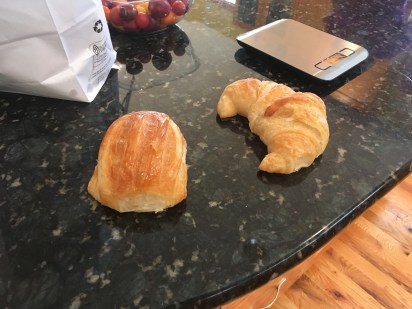
Don’t let the photo fool you. Vietnam was colonized by the French, and so the Vietnamese snagged one of the things France is good at: bread. The end result is some tasty combinations of cultures coming together.

I heard about Trung Nam through a friend of my parents. The word was, they had the best croissants you’d ever tasted. But there’s a catch: they only take cash, they’re only open until 1 pm, and if you show up after 10 am, all the good, fresh ones will be gone. So at 9 in the morning, I went on an excursion for breakfast.

Trung Nam is on University Ave in an area dense with cultural food. Across the street is a ramen restaurant, a place called iPho (which is super clever), and a massive Chinese supermarket. Trung Nam itself is very unassuming. The building, if I had to guess, used to be a Taco John’s, but it was definitely some kind of fast food restaurant in another life.

Inside, it smells amazing, the first good sign of a good bakery. We had to look this up: not only does the smell of fresh bread make you act kinder, but any pleasant smell will have a similar effect. So if you want to have a better day, clean up your house! (I’m really disappointed in myself for discovering that, because now I have less excuses to not clean up.)

The menu is fairly limited, which is also usually a sign of quality. It allows a restaurant to focus on what it’s good at, like how Five Guys only makes burgers and fries. Anyways, we came home with five croissants of four flavors. The croissants are $2.50 each, so I expected good things.

Photo May 04, 9 15 15 AM.jpg

These croissants are really, really good. Flakey, soft, perfect for sandwiches or just eating straight. Between three people, we ate all five in less than 10 minutes. The flavored options (apple, raspberry, chocolate) were all great, but the chocolate was a bit underwhelming compared to the other two. I’m chalking it up to there not actually being much chocolate in the pastry.

Trung Nam also offers sandwiches and pork buns, which are next on our list. The bakery is on University, west of Dale St.

Song of the Week for May 13, 2018

It’s time for a little humor, and I don’t mean Steve Martin’s greatest hits (although King Tut is a classic).

Song of the Week: Smooth by Neil Cicierega

The savvy among you will recognize Smooth Criminal by Michael Jackson and One Week by Barenaked Ladies, as well as smatterings of other songs. You may also notice that this combination of songs actually sounds…almost intentional, as if the two songs were made for each other. That’s what Neil Cicierega does.

Neil Cicerega started out as an internet silly person back before Youtube. You can hear all about his rise to “stardom” in his talk at the XOXO Festival, a gathering of independent creatives. Those with knowledge of the old memes will recognize his work from Potter Puppet Pals (circa 2007), The Ultimate Showdown of Ultimate Destiny (circa 2008), or, more recently, Mouth Silence and its sequels. Smooth is from the third Mouth ______ album.

But why are these songs so funny? It works for two reasons. First, because it sounds natural. Your mind can comprehend the songs that were used to put this song together, but it also recognizes a competent composition in its own right. This is where the second reason comes in: the laws of jokes and why things are funny.

No one has figured out why jokes are funny, at least not totally. If we did, we could write algorithms and come up with all the jokes ever. However, there is a basic rule that most jokes follow: combining together two or more things that don’t normally go together or make sense together. Take this classic example from Groucho Marx: “Last week, I shot an elephant in my pajamas. How the elephant got in my pajamas, I’ll never know.” You start assuming that Groucho was in his pajamas. Then, when it is reveals that the elephant was in his pajamas, your mind has a revelation of the situation. The area of your brain related to those revelations is the same that processes humor, and so you laugh.

Back to the music. Using a similar concept, Neil has combined two songs that you don’t expect to hear together, and when your brain comprehends that, it triggers a humor response. You can then either be done with the song, having gotten the joke, or keep listening because you genuinely think the song is good. Your choice.

I do recommend listening to the entire 55-minute album. Some of the songs aren’t great, but that’s true of any album. If you want to dive directly into the deep end of music that is jokes, I recommend Siivagunner. However, this leads to a problem with humor: you need to know the references. Siivagunner uses video game music, so if you’re not versed in the topic, you won’t understand all the jokes. Some of them will still work, like this one (if you know Taylor Swift, you’ll get at least half the joke), but others, like this one, won’t because you don’t know that there’s a joke. It’s a joke told in Russian: without context, you don’t know it’s supposed to be funny.

The Liam Neeson Peril Meter

Today, I finished re-listening to the TV Crimes Podcast (come back to us one day, you glorious bastards), and needed a new distraction on my drive around town. I ended up on a Magnum P.I. re-watch podcast, and this gave me an idea. Re-watch podcasts are a thing, and I’m all about trying new things. I also like watching movies, and as the progenitor of the Liam Neeson Peril Meter, I kinda feel I owe it to the world to present my findings.

First things first: this is not the announcement of a podcast. I’m still working on technical things, like having a good enough microphone, and having the time to watch these movies with other people so we can have podcast banter. This is just an exploration of what the podcast could be, and what the LNPM is. Hopefully, the podcast will follow soon.

Second: a re-watch podcast is a podcast (internet talk radio-ish) where each episode of the podcast is a discussion of one episode in a show, or one movie in a chronology. For example, there are re-watch podcasts of Magnum P.I., every Star Trek series, and multiple different podcasts named Countdown to Infinity re-watching all the Marvel movies before Avengers: Infinity War.

Now that that’s out of the way, what the heck is the Liam Neeson Peril Meter, or the LNPM?

Liam Neeson is a prolific actor. His first credited role on IMDB is in the leading role of Pilgrim’s Progress, a classic Christian tale, in 1978. Up through the 80’s, he had a variety of roles, but in the 90’s, he found his true calling: action. Not the kind of action that Vin Diesel or Sylvester Stallone would be in; you won’t see Neeson in The Expendables 4. Liam Neeson excels in movies where violence feels like the last resort, even though violence is exactly where we’re headed. Some of his best roles aren’t in action movies (Schindler’s List, The Lego Movie), but he’s got the range for it.

Because of his many roles in dramatic action movies, I started to wonder: how much trouble does Liam Neeson get into in these movies? How does he handle this trouble? To that end, I devised the Liam Neeson Peril Meter to categorize, from 1 to 10, the amount of peril that Liam Neeson is in, per movie, taking into account how he handles that peril. For some examples: in Star Wars: Episode 1, Liam Neeson is in a fair amount of peril, but he handles it so well that I would probably rate it a 3 at most. In Taken, Neeson is in about as much peril, but guns his way through all of it, making the peril seem much greater, so probably a 7 or 8.

I have a Google Sheet of 71 films, guest appearances on TV shows, and one video game. If this podcast actually happens, I don’t know how many of those get watched, but I’m hoping for all of them.

Which movie do you think will rate the highest? The lowest? Does anyone else remember Sam Raimi’s early attempt at superheroes Darkman?

Finding a little cash: Donating Plasma

This is something I haven’t done before, but it’s not particularly exclusive to the Twin Cities. However, since it is a new experience for me, I figured I’d talk about it.

My brother has talked about donating plasma before. It’s spending money, or lunch money, or emergency funds. So last week, I went to a local plasma donation center and signed up.

For those who don’t know, plasma is the liquid part of your blood. It’s important for your circulation, but not as important as red blood cells. However, that same plasma can be used to create medication. Your body can stand to lose a little plasma every now and then, just like it can stand to lose a little blood now and then. But since the plasma isn’t as important to your circulation, you can lose more of it at a time. At most, you can give about a pint every visit, and you can donate twice a week.

If you want to get signed up, keep in mind that your first visit will take a while. Because they’re messing around with your fluids and your fluids are important for you as well as for their future use, it’s important that you are healthy going into the procedure. All added up, between signing up, safety information, a quick physical, screening (done every visit), and the actual procedure, it took almost 2 hours. I’ve been informed that it will take only a little over an hour on future visits.

The procedure itself isn’t painful. The worst part for me was that I had to be constantly squeezing my hand, in order to keep blood flowing. That’s not something I usually do, so my hand muscles were complaining. Other than that, they drew out a lot of my blood, spun out the plasma, added in saline, and pumped it all back in. No dizziness, no muscle weakness, nothing.

The first few visits at this particular clinic give a bonus, and once the bonus is over, the regular pay can get up to $300 per month. It’s not living money, but for 2.5 hours per week, it’s pretty good extra money.

Song of the Week for May 6, 2018

A few weeks ago, the song was from League of Legends, and I mentioned that there would be more coming from their extensive collection. That day came early.

Song of the Week: Mortal Reminder by Pentakill

This extended “joke” started as a series of skins (alternate costumes) for five of the characters in the game. Each was given a role in a metal band: a singer, a drummer, a keyboard-ist (keyboard-er? “Pianist” sounds too fancy for metal), a bassist, and lead guitar. The fans gravitated to this fun addition to the game, and so behind the scenes, Riot Games started working on Pentakill’s big debut album.

In 2014, the first album from this fictitious band, Smite and Ignite was released. Of the eight tracks, seven are direct references to items in the game. But the song for this week isn’t from that album. It’s from their sophomore album.

As I write this, my iTunes has finished Mortal Reminder and moved on to Tear of the Goddess, which features the new female vocalist on some of the tracks, and helped to mark the release of a sixth skin. All of this work for a sixth skin, or a sixth skin for all this work? We may never know.

As for the music video, which is definitely up to League of Legend’s standards recently, there’s not much to say. The adorable little fuzzy people learn the true power of metal. It’s the kind of ridiculous that you want from your runaway in-jokes.

Storytelling with Cardstock 1

I’m preemptively numbering this bit because I’m sure I’ll come back to it again.

My expensive hobby of choice is Magic: the Gathering. Most people have an expensive hobby, and usually just the one. Football games, concerts, cars, whisky, Warhammer 40k, Magic: the Gathering; all of these cost money to have fun, but it’s worth it. Recently, I’ve become more observant of every part of the card, and this has lead to a greater appreciation of the game.

In order to continue, I feel like a primer of Magic might be in order. If you want to learn how to play, this video is a silly, technically accurate summary, and this video is a shorter, more official version. If you don’t necessarily want to learn, that’s fine. Take a look at this example card here.

Suntail Hawk

Each part of the card is important, but for when you play the game, some parts are more important. For example, the top-right corner is the cost, just like at the store. The more stuff is up there, the more resources is costs. The bottom-right corner is how big this card is once you have paid the cost to have it. These are both pretty important. Things that are not very important to gameplay include the artwork, the name (top-left), and the flavor text (the stuff in the lower box in italics). However, if all that mattered was the cost and size, why put the art and the name on the card? Just call it Flying Guy and knock off for lunch.

But the art matters. Each expansion to this game takes place in a defined world, with characters and stories. Some of those characters are larger than life, and their stories shape the world around them. Some of those characters are like this Suntail Hawk: just a part of the world, but how they interact with the world defines them both. A few years ago, Magic’s expansion was set in the gothic horror world of Innistrad for the second time, and the stories in the cards were excellent.

A few things about Innistrad. The world was designed to be Humans vs Bela Lugosi’s Greatest Hits. There’s vampires, werewolves, zombies, and ghosts, and the humans are beset on all sides. In order to denote the changing nature of werewolves through gameplay, as well as other important changes, Magic introduced double-faced cards. Instead of having the uniform card back like every card game has, some cards had two fronts. Through gameplay, these cards could turn over, transforming from one side to the other, but remaining the same creature.

The art for the werewolves had to show that it was the same entity from front to back, but that their transformation was affecting their world. For example, here’s Hinterland Logger. On her front, she’s a beefy human with some splintered logs. This makes sense; she’s a logger, after all. But if we look to her flavor text below the art, we see an anecdote about how she refused to buy axes. That’s odd. When she transforms to her other side, we see the secret to her logging: she’s a massive werewolf that rumbles through the trees. The flavor text now refers to the axes as “inferior”, and I’d believe her.

Two other strong werewolves: Breakneck Rider (both a pun about being a Neck Breaker as a werewolf, and you can see the horse he was riding dead on the ground) and Village Messenger (he has some bad news, and the news is he’s coming to get you).

On the second visit to Innistrad, there was a new threat. Gothic horror was being invaded by Lovecraftian horror. Tentacles and mind intrusion everywhere. It settled into the werewolves quite nicely. After all, they were prone to changing forms; what’s a few extra tentacles and body horror? Originally, the werewolves could turn back into humans, but these new werewolves, once possessed by tentacles, could not change back. Kessig Prowler is the best example of this. The flavor text tells the story in two sentences, and the art makes it very clear that something has gone wrong.

There’s so much more art and story to talk about. I’ve got a list as long as the video game to-do list. If anyone reads this, what’s your favorite Magic story-in-a-card? If you don’t play Magic, what are other places that have little contained stories like this?

American History: Inspiration from Pilot Knob

There’s a lot of American history that we learn in school, about how the country was formed and what has happened since then. There’s also a lot of cultural history running around, and it’s just as important. An aspect of history that I didn’t learn much about, and I’m afraid still isn’t being taught much, is Native American history. Who was here before us, and how did my state transition from a Native American territory to a United States territory?

Near Fort Snelling (which is important for various reasons), Pilot Knob stands as a sort of “peak”. Even though it isn’t very tall, it sits on the bank of the Mississippi River, making it an ideal vantage point. To the Dakota people, it was Oheyawahi, which means “a hill much visited”. The visits were not just for scouting; the hill was also a cemetery. This site was well known to the Dakota, and not just because of its cultural significance.

Photo Apr 20, 3 38 50 PM.jpg

A brief walk from the highest point leads to a simple circle with seven stones cut from Minnesota stone. Each bears the name of one of the tribes that signed over their land to the United States in the 1850s. The negotiations started in a warehouse, but Chief Wabasha (for whom the town of Wabasha is named) requested they be moved to this hill, so the Dakota could see what they were giving up.

What I found interesting is the names of the tribes. Because I think words are really neat, the names of the tribes stuck out to me. There are seven stones and seven names, but one doesn’t end with “-wan” or “-wana”. I guessed that “-wan” meant “people”, which is true, but were then the Wahpekute not a “people”? Were they not Dakotan, and therefore used a different language with a different name structure?

It turns out it was the first option. Wakpekute comes from the words for “to shoot” and “leaves”, meaning they were the shooters from the leaves, or the guerrilla warriors. In fact, the two stones I photographed were the two major tribes in the area.

This is an example not only of appreciating the history that came before us, but also of taking advantage of the great internet that we have to learn something. Don’t be afraid of learning. There’s little opportunities everywhere.