
Another post, another round of comic book references to go through! Prepare yourself for some villainy! But we’re going to start with a few of the most iconic scenes in all of Spider-Man canon.
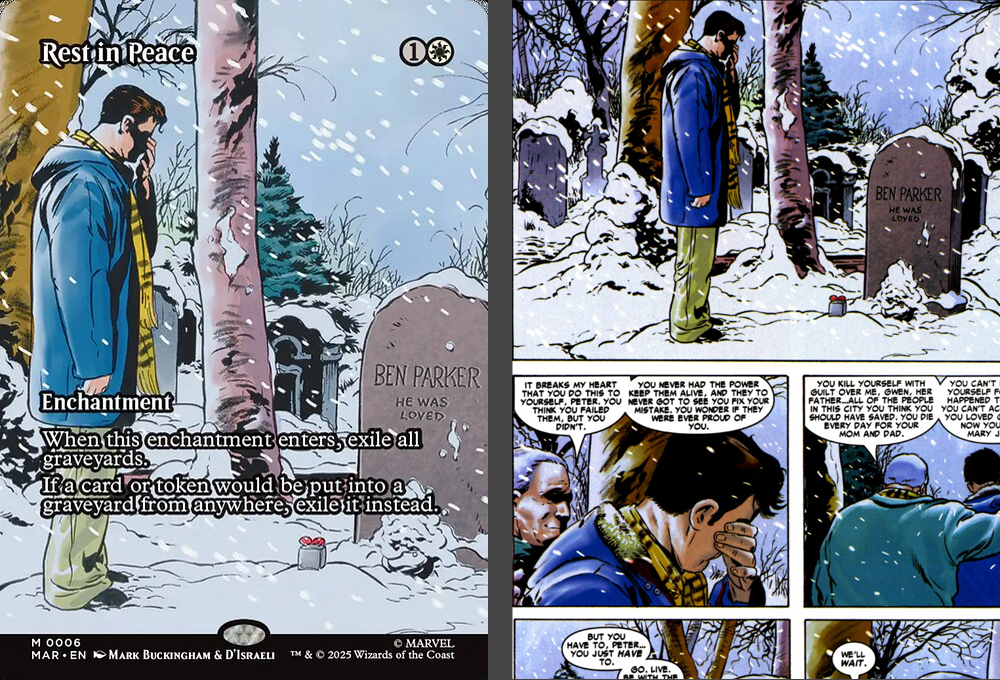
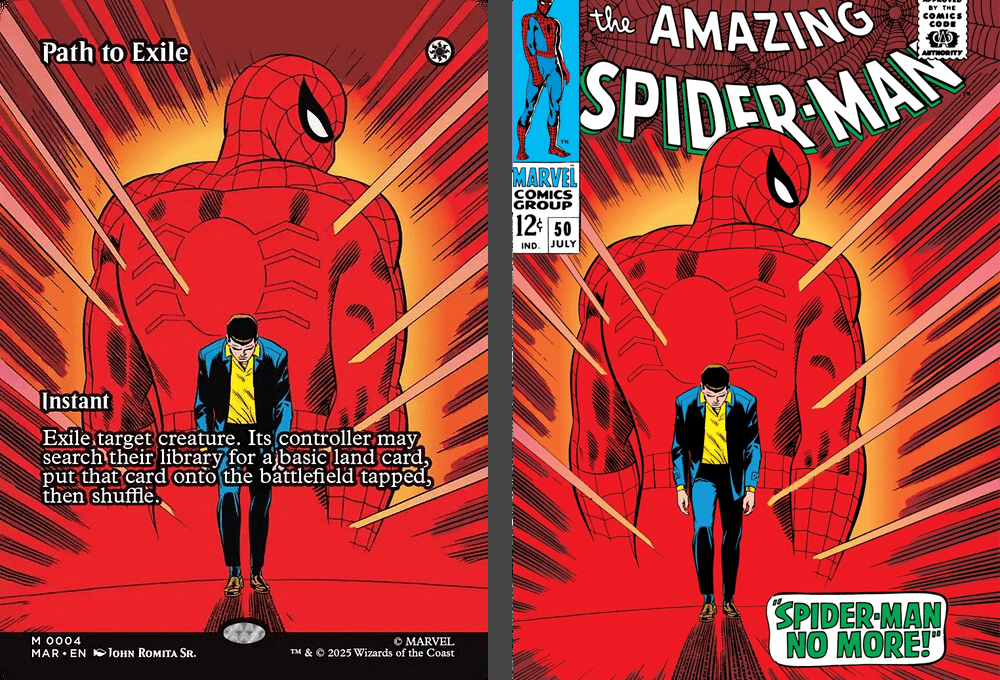
You’re not seeing things, that is Ben Parker in the following panels. This is the last issue in this particular run of comics, and it contains side references to Calvin and Hobbes, looks back at what makes Spider-Man a hero, and an emotional farewell not just to Peter Parker’s inspiration, but probably a farewell to the journey of creating the comics by the writers and artists themselves; this is made crystal clear by the final page of the comic featuring not just a literal final act bow from Spider-Man and all his allies and villains, but also the artists in the background.
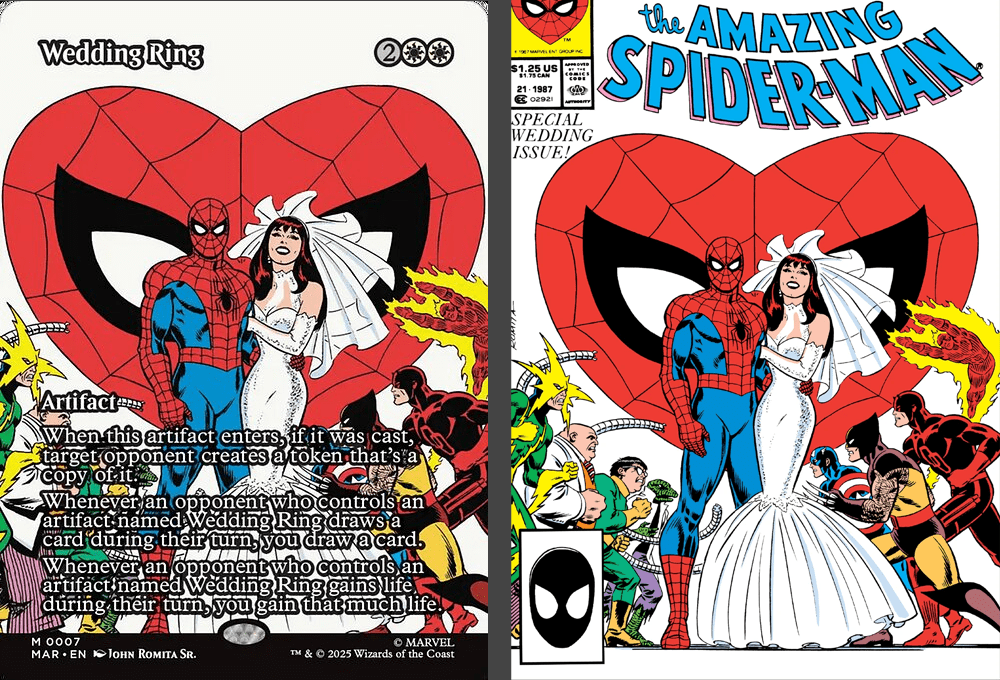
If we’re talking about a single most iconic cover from Spider-Man, it might be this one (or more likely, the traditional version where Peter Parker is in a normal wedding suit). Weddings rarely work in comics. Giving a hero a stable relationship removes a lot of potential for easy drama. Also, breaking up weddings is a very villainous act, so they often fail to finish. Peter Parker and the new Mary-Jane Watson Parker are rare among comic book characters; not only did they get married once, but across multiple retellings of the story, they keep finding each other.
Also an important note that will be relevant soon: Annuals were big storyline important issues, produced, well, annually, that were often twice as big as normal comics.
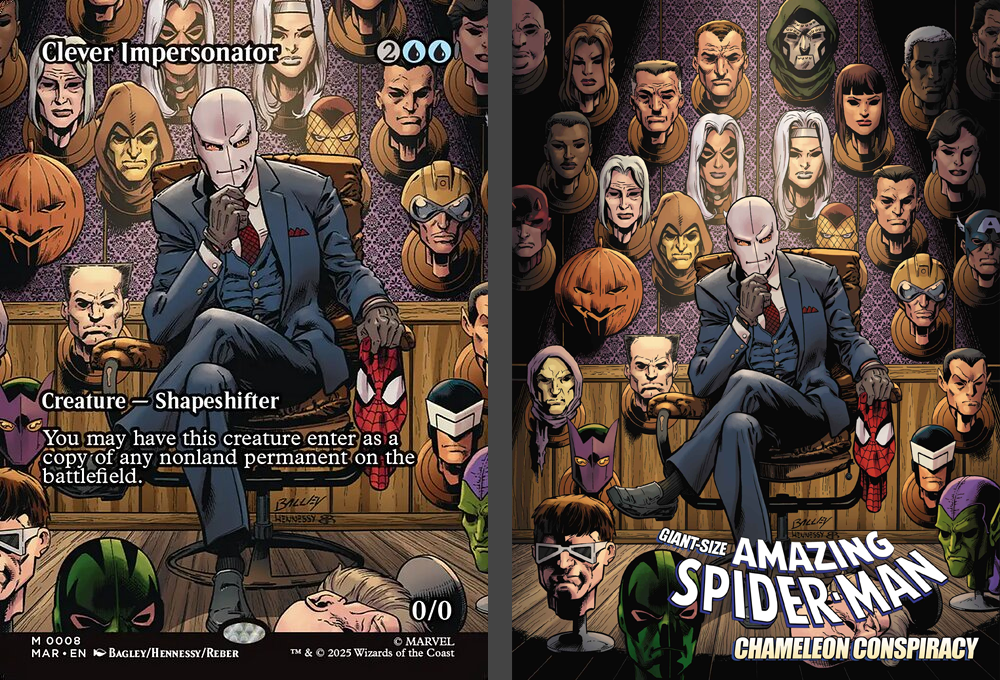
While this isn’t necessarily an “iconic” image, there’s not a lot of them for Chameleon, whose superpower is the ability to not look like himself, so any important panel with him in it often doesn’t look like he’s in it. This issue is from the modern version of Annuals, taking place between the rebooted Amazing Spider-Man #69 and #70. Without reading too many comics on either side, it appears that Chameleon is not the only one who can do that. He comes from a secret child soldier program full of shapeshifters, and attempts to gaslight Peter Parker’s younger sister Teresa, who is a secret government agent, that she has been a shapeshifter the whole time. Comics are weird.
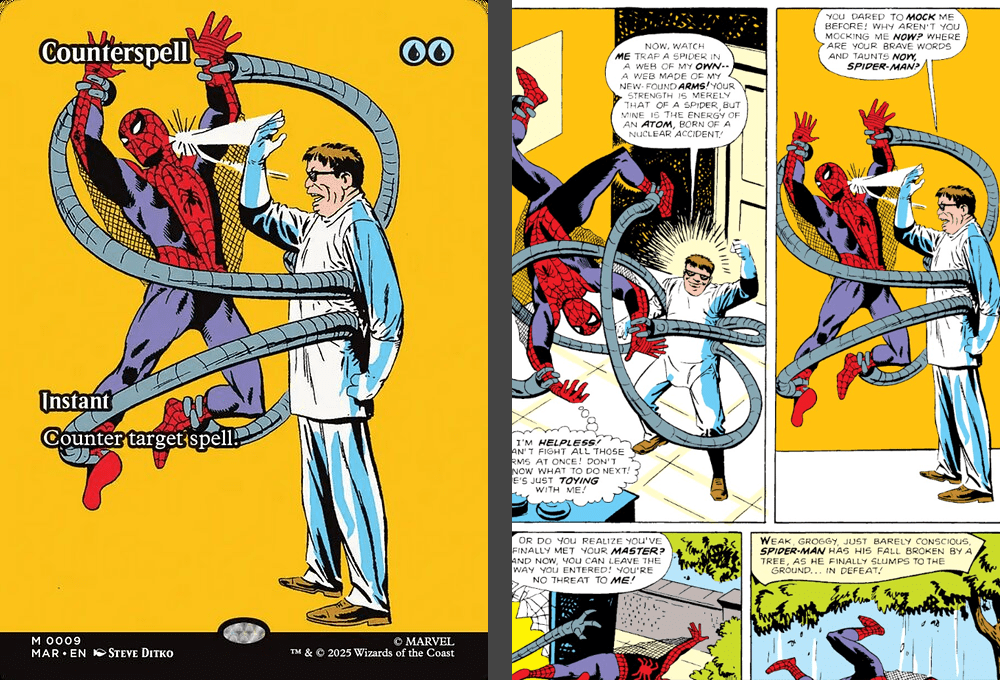
Going from not terribly iconic back to character-defining, this is from the third issue of Amazing Spider-Man, and the debut of Doctor Octopus. The background of the card is yellow because, as you can see, the background of the panel, and most of the fight panels before it, were yellow due to the yellow wall of the room they’re fighting in. Peter Parker then attends a guest lecture by The Human Torch, who provides the brand recognition and motivation to go back and win the rematch.
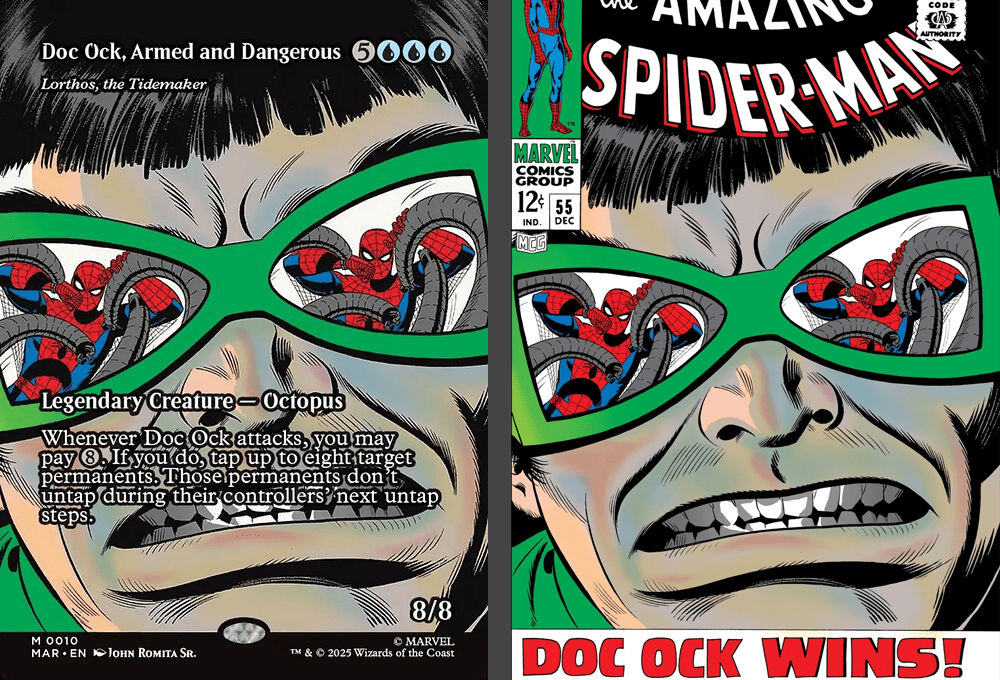
Often, older comics will put something inflammatory on the cover in order to entice readers. The classic examples are those older Superman comics where Superman is being an asshole, and when you actually read the comic, it turns out the cover is a gross misrepresentation. So, does Doc Ock win in this comic? Yep, he shoots Spider-Man with a weapon called a Nullifier that disables all technology, and apparently causes amnesia, so he convinces Spider-Man that they’re allies. To be continued! (Spoilers, he kicks Doc Ock’s ass despite not getting his memory back, and J. Jonah Jameson considers the fact that he has no pictures of villainous Spider-Man to be a communist plot.)
 That's Pretty NEET